
Missing from this article is a call for hitting the source of this problem, which is to reduce the excess nutrients being put into the water which kills the natural food supply for the manatees. Reducing the septic tanks and stopping the urban and agricultural fertilizer input will be necessary.
So far this has been way too much for our spineless leaders in Tallahassee to tackle. The problem is they want to be re-elected and they want the money from the polluters’ lobbyists.
The Gainesville Sun does not provide a link to this article.
Comments by OSFR historian Jim Tatum.
jim.tatum@oursantaferiver.org
– A river is like a life: once taken,
it cannot be brought back © Jim Tatum
Scientists assess success of manatee lettuce-feeding plan
Max Chesnes Treasure Coast Newspapers | USA TODAY NETWORK – FLORIDA
May 28, 2022
With winter long gone and Florida manatees dispersed in warmer waters, state and federal wildlife officials are gleaning data from an unprecedented feeding trial to answer this question: What lessons can be learned?
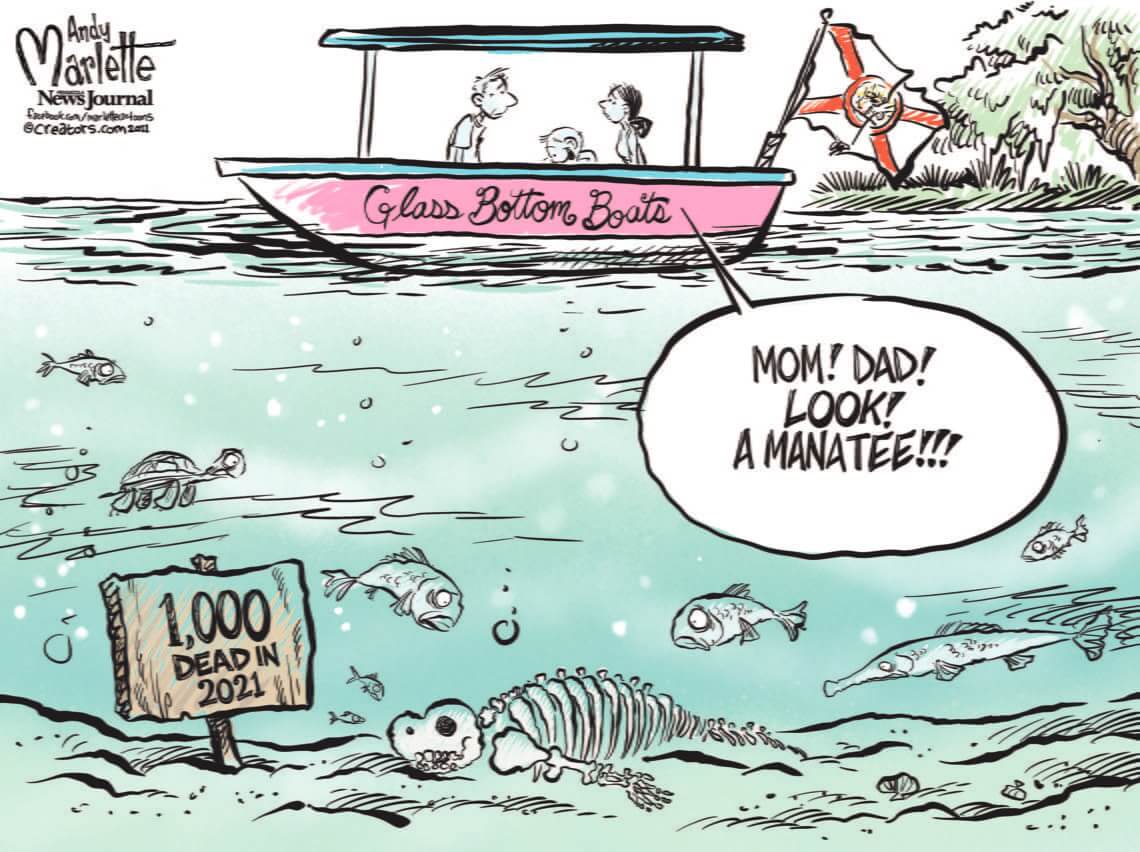
At least 1,650 manatees statewide have died since January 2020. Hundreds have succumbed to chronic malnutrition as their main food source, seagrass, has been choked out by decades of anthropogenic pollution in the Indian River Lagoon.
Scrambling to slow the record loss of life and with meaningful ecosystem restoration years away, officials in December approved a months-long feeding trial that concluded in March, after 101 tons of butterleaf and romaine lettuce were put out for starving sea cows.
Now, biologists are assessing the successes and shortfalls of the first-ever feeding trial for the state’s official marine mammal — and searching for answers on whether to expand those efforts next winter.
That ongoing evaluation includes parsing through thousands of photographs captured by trail cameras set up at the temporary feeding site at the Florida Power & Light Cape Canaveral Next Generation Clean Energy Center in Brevard County. Biologists are
looking to identify specific manatees and how often they came to feed, according to Ron Mezich of the Florida Fish and Wildlife Conservation Commission.
Veterinarians are also examining the carcasses of manatees that didn’t make it through the winter — at least 325 in Brevard County alone — and determining the implications of some dead animals having lettuce in their stomachs, said Martine de Wit, the state veterinarian who leads the FWC Fish and Wildlife Research Institute’s necropsy lab in St. Petersburg.
All the while, biologists study the behavior patterns of creatures now summering as far away as Georgia, and rescue teams continue to respond to the uptick of manatees in need and prepare for Memorial Day boaters who could further stress mammals on the move.
“The Indian River Lagoon isn’t going to regrow its seagrass beds over the summer in any fashion that’s going to support the manatees when they return back to those waters this fall,” said Jon Wallace, incident commander for the U.S. Fish and Wildlife Service, in a May 25 media call.
“We are still doing a lot of planning and getting ready for next winter and fall,” he said.
Manatee necropsies: Animals fed on lettuce
Recent autopsies have shown some dead manatees had lettuce in their stomachs — an indication not every mammal that benefitted from this winter’s feeding trial survived, according de Wit, who couldn’t provide an exact number. But it’s too early to tell what conclusions can be drawn, as not all data have been reviewed, she said. These mammals already had been surviving day to day, with very little nutrition, as pollution killed their food source needed for strength and survival.
“You have an animal that has been dealing with this for over a year, and then eats a little bit of lettuce. What is it going to tell you?,” de Wit told TCPalm. “That lettuce was not going to save those animals, unfortunately.”
There is early evidence, however, that the death rate was slower this year compared to last year, according to de Wit and an analysis of FWC data.
“There are differences between last year when we didn’t do the trial, and this year when we did,” de Wit said. “The season of the increased mortality was shorter.”
Between January and March of last year, 609 manatees died, state mortality data show. This year, 477 died in the same timeframe.
“Did that feeding have an effect? I would not be able to tell you at this point,” de Wit said. “The fact that you find some lettuce in some of these carcasses, it is expected.”
Many manatees remain in rehab
As of May 25, more than 90 manatees were receiving care at 14 rehabilitation facilities across the nation, according to Amber Howell, lead manatee biologist for FWC’s southeast field station.
Of those, 76 were in Florida, including at SeaWorld in Orlando and the Jacksonville Zoo and Gardens, the only two facilities currently able to accept new rescues. There also were 12 manatees being cared for in Ohio, two in Georgia, one in Texas and one in Puerto Rico, according to Howell….