


The power of lobbyists and big corporations continues to run our country. SCOTUS needs to re-do some earlier work and reverse Citizens United.
Comments by OSFR historian Jim Tatum.
jim.tatum@oursantaferiver.org
– A river is like a life: once taken,
it cannot be brought back © Jim Tatum
Leaked: US power companies secretly spending millions to protect profits and fight clean energy
One industry consulting firm has influenced politics across Florida, Alabama and at least six other states
Wed 27 Jul 2022 07.00 EDT
Last modified on Wed 27 Jul 2022 10.28 EDT
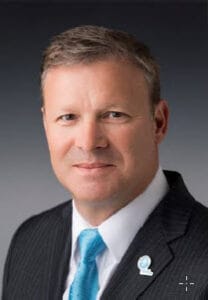
The CEO of the biggest power company in the US had a problem. A Democratic state senator was proposing a law that could cut into Florida Power & Light’s (FPL) profits. Landlords would be able to sell cheap rooftop solar power directly to their tenants – bypassing FPL and its monopoly on electricity.
“I want you to make his life a living hell … seriously,” FPL’s CEO Eric Silagy wrote in a 2019 email to two of his vice-presidents about state Senator José Javier Rodríguez, who proposed the legislation.
Within minutes, one of them forwarded the directive to the CEO of Matrix, LLC, a powerful but little-known political consulting firm that has operated behind the scenes in at least eight states.
Rodríguez was ousted from office in the next election. Matrix employees spent heavily on political advertisements for a candidate with the same last name as Rodríguez, who split the vote. That candidate later admitted he was bribed to run.
Hundreds of pages of internal documents – which are only coming to light now because Matrix’s founders are locked in an epic feud – detail the firm’s secret work to help power companies like FPL protect their profits and fight the transition to cleaner forms of energy.
The Matrix saga illustrates the political obstacles policymakers and experts face as they attempt to cut climate pollution from the power sector, one of the biggest greenhouse gas contributors in the US.
The ongoing clash between Matrix’s founder Joe Perkins, 72, and former CEO Jeff Pitts, 51, is exposing the firm’s decades of extensive influence peddling on behalf of utility clients.
The issue extends to several states. Records obtained by Floodlight and the Orlando Sentinel show that Matrix consulted for FPL, as well as another Florida company, Gulf Power, and Alabama Power. Matrix affiliated groups have also worked to advance power companies’ interests in Arizona, Louisiana, Mississippi, Georgia, and in front of the Environmental Protection Agency, public records show.
In Florida, Matrix’s work touched almost every level of politics, from influencing local mayoral and county commission elections to combating attempts to reshape the state constitution. In each of those cases, Matrix was working against politicians or policies fighting to curb the climate crisis by encouraging renewable power.
Matrix employees had a Jacksonville journalist spied on after he wrote critically about FPL. And in 2020, Matrix even harnessed the power of the press for itself, when its employees acquired control of The Capitolist, a Tallahassee-based political news site which it used for favorable coverage, leaked records show.
“I find this to be horrifying and undemocratic,” said Gianna Trocino Bonner, former chief legislative aide for Rodríguez, after reviewing some of the leaked documents. “It’s unfortunate that our process allows for something like this to exist without accountability.”
Big power companies operate as monopolies with captive customers in much of the south-east US. They are supposed to be closely regulated, but their profits and unchecked political spending makes them some of the most powerful entities in a state.
Howard Crystal, an attorney for the environmental group Center for Biological Diversity, said that US utilities are allowed monopoly power “because they are supposed to expand the public interest.
“[But] now we have this incredible corruption and a reversal of that because they are using their advantage to hang on to power and undermine democracy,” he said.
So far, there have been two criminal investigations into the campaign against Rodríguez and another Democratic state senate candidate, leading to charges against five people, though authorities have not accused Matrix or FPL of wrongdoing.
ther now-former employees had been conducting “shadow activities and operations” dating back to 2016. He is suing Pitts in Alabama for fraud and conspiracy.
“For many years and without my knowledge or approval, Pitts abused his power and position to benefit himself and his cronies,” Perkins said in a statement. “Upon realizing the extent of Pitts’s shadow operations and abuses of power, we filed our lawsuit against Pitts and those few rogue employees.”
Pitts, who left Matrix in December 2020 to start his own firm, Canopy Partners, did not respond to a request for comment by deadline. He is also suing Perkins, alleging defamation and extortion. A spokesperson for FPL said it stopped working with Canopy in late 2021.
Silagy said the email in which he told his team to make Rodríguez’s life “a living hell” was “a poor choice of words”.
Digging for dirt
In Florida, FPL and Matrix demonstrated how a utility and its consultants can work in tandem to resist clean energy reforms. FPL deployed lobbyists to the capital, while Matrix hired private investigators to dig for dirt and had operatives funnel dark money and order attack ads.
Few examples are clearer than the case of South Miami. When the small south Florida city’s mayor helped pass an ordinance in 2017 mandating rooftop solar panels on new construction, a network of 10 FPL-aligned operatives mobilized to ensure his ouster.
The team decided an effort to repeal the ordinance would probably fail. So they opted instead for “Mayor Stoddard’s electoral defeat and changing the makeup of the board”, according to a 2018 memo from Dan Newman, a Matrix contractor who was similarly involved in the campaign against Rodríguez.
The plan ultimately failed, and Stoddard was re-elected. He has denied the allegations.
“An organization that acts like a mafia should be treated like one,” Stoddard said.
In a statement, Newman acknowledged managing the campaign against Stoddard and hiring a private investigator to look into the former mayor’s personal life. He said what he found was “deeply disturbing”.
Matrix’s influence was felt on matters small and large, from Stoddard’s city of less than 12,000 to statewide fights over the Florida constitution. In 2019, when the electric utility industry was up in arms about a constitutional amendment to open up competition in Florida’s energy market, a Matrix-linked non-profit poured more than $10m into groups fighting it.
Matrix also exerted political influence through the press, with its operatives acquiring control of a Tallahassee-based politics news site, The Capitolist. That gave Matrix consultants and FPL executives input on Capitolist stories.
The site’s publisher, Brian Burgess, a former top spokesperson for past Florida governor Rick Scott, also suggested in emails that Matrix should lure prominent Florida journalists to a new site or buy local papers owned by media giant Gannett Company and then lay off most of the “clown reporters” to “inject content” into publications without anyone knowing who was “pulling the strings”. That proposal was forwarded to Silagy at FPL but never came to fruition.
Burgess said he “never pitched nor solicited feedback from FPL executives on any story or business venture”, and FPL spokesperson Chris McGrath said acquiring a news organization would not have made sense as a business deal for FPL.
Headquartered in Montgomery, Matrix has been described there as “the closest thing Alabama politics has to a non-governmental secret agency”.
Perkins and Pitts worked together for more than 25 years, expanding the firm into a national operation with dozens of clients in myriad industries.
But wherever the pair went, indictments often followed.
From the beginning, Matrix showed no aversion to unsavory political tactics. In 1998, the firm distributed copies of a video in which a sex worker falsely alleged she had been sexually assaulted by a candidate for lieutenant governor. The sex worker later testified the allegations were untrue, and that she had been paid by a Birmingham businessman to make them.
In 2015, Matrix distributed fliers for a suspicious charity in a predominantly Black neighborhood in North Birmingham. The fliers warned residents not to let the Environmental Protection Agency test their soil for the presence of contaminants left by a coal plant.
One of Matrix’s oldest clients is Alabama Power, which employed Perkins’ personal consulting firm as early as 1999. In 2018, Perkins Communications received at least $1.49m from Alabama Power, a leaked contract shows.
Those who provoked the utility’s ire suffered a harsh response.
In 2013, Terry Dunn, a Republican electricity regulator at Alabama’s Public Service Commission made moves to hold formal hearings on how customers’ energy bills were calculated – something that hadn’t happened in three decades. Customers at the time were paying some of the highest rates for electricity in the south-east.
Soon, Dunn faced attacks in the rightwing press and online, while Matrix-affiliated groups – some of which received millions from a non-profit run by a contractor for Alabama Power – filed a motion to intervene in the proceedings. Meanwhile, groups aligned with the utility falsely tied Dunn to the Obama administration’s efforts to reduce the use of coal.
“Southern Company and Alabama Power run the state of Alabama,” Dunn said. “They work off intimidating. You gotta bow down and kiss the ring.”
A spokesperson for the company declined to comment on the firm’s activities. Perkins called Matrix’s work for the utility “confidential”.
Ari Peskoe, director of the Electricity Law Initiative at Harvard Law School said the “whole purpose” of firms like Matrix “is to conceal that it’s the utility doing this. The utility doesn’t want to be associated with this campaign.”
Things start going ‘sideways’
Matrix grew so large that by 2015 it was operating several private aircraft to whisk Pitts and Perkins to client meetings. Flight data shows Matrix’s planes made more than 130 flights to five states in 2020 alone, frequently crisscrossing the south-eastern US but also traveling as far west as New Mexico….
Silagy, the FPL CEO, says the pair initially told him they had come to an amicable agreement about parting ways. He says he told them that he was disappointed, but there was enough work for both of them, “based on the good work they had done”.
“And then apparently, somewhere along the way, Jeff and Joe got sideways,” Silagy said.
Jeff Weiner for the Orlando Sentinel contributed reporting