
John Miklos, long the subject of controversy and stain on the St. Johns River Water Management District, has managed to make the news once again, years after leaving his leadership role in the water management district.
And as before, the news is not good.
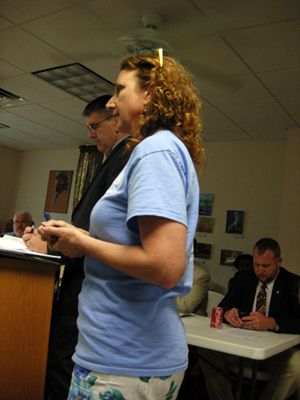
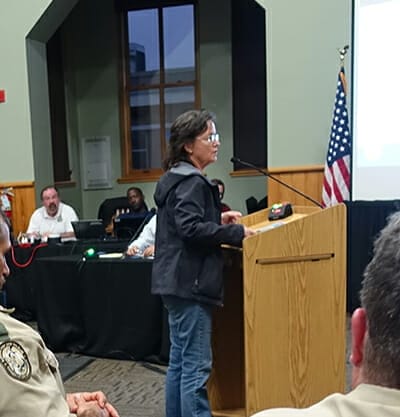
Greenberg is just the last of a long list of people calling Miklos out for unethical behavior. Not least among these is environmentalist Karen Chadwick, who asked Miklos to step down at a regular board meeting in Palatka at which your historian was present.
Adding fuel to the controversy was the fact that the SJRWMD Board of Directors repeatedly elected Miklos their chair, flaunting a tradition of rotating the chairmanship. Critics assumed that this was a manifestation of nose-thumbing to those who criticized the board and the district’s executive director Ann Shortelle for allowing Mikos to remain in his job in spite of overwhelming evidence of corruption.
Shortelle and the remaining board supported Miklos and allowed him to continue his board chairman tenure while also engaging in his questionable private business tactics.
Shortelle and Miklos presided over the district during the highly controversial granting of pumping permits to a foreign-owned cattle company to extract damaging amounts of water needed by Silver Springs, perhaps Florida’s most iconic spring.
The citizens of Florida see Silver Springs as belonging to them and as such, should not be allowed to be harmed. The SJWMD ostensibly exists to protect springs such as these but the district decided that the foreign-owned business was more important.
Ensuing lawsuits by environmentalists and environmental groups all resulted in failure.
The Gainesville Sun does not provide a link to this article.
Comments by OSFR historian Jim Tatum.
jim.tatum@oursantaferiver.org
– A river is like a life: once taken,
it cannot be brought back © Jim Tatum
Greenberg accuses Miklos of misconduct
Advocates want projects to be discontinued
Dinah Voyles Pulver and Mark Harper
USA TODAY NETWORK
Convicted felon Joel Greenberg alleged former chairman of the St. Johns River Water Management District John Miklos was the go-to person for making obstacles disappear in difficult-to-approve environmental permitting projects. Now environmental advocates want local authorities in Central Florida to shut down any projects underway where Miklos’ environmental consulting company is involved.
Miklos’ name surfaced in a June deposition by Greenberg, former Seminole County Tax Collector, who is set to be sentenced Dec. 1. Greenberg, who resigned in June 2020, pleaded guilty in May 2021 to six charges, including sex trafficking of children, conspiracy to commit an offense against the United States, wire fraud and stalking.
“Miklos would get greased off or something, and then they would all magically be approved,” Greenberg said of permit applications before the board in a redacted transcript. “And this was rinse and repeat, what they would do.”
Miklos would “write checks” to certain people in return, at the behest of an unknown party, whose name was redacted.
Miklos did not respond to requests for comment on the allegations.
In the plea deal that saw 27 other charges dropped, Greenberg admitted using a “sugar daddy” website to meet young women. He admitted to taking drugs and having sex with a 17-year-old seven times in 2017 and introducing her to other unidentified men.
He is closely linked to Republican Rep. Matt Gaetz of Florida and even been called the congressman’s “wingman.” Gaetz is under federal investigation by the Justice Department for violation of federal sex trafficking laws, which he denies.
As part of the plea deal Greenberg committed to cooperating with authorities investigating other cases.
Greenberg gave the deposition in June at the Orange County jail to state authorities investigating illegal campaign contributions involving Jestine Iannotti, a former Florida State Senate candidate in District 9, in the service of helping her Republican opponent, Jason Brodeur, a Daytona Beach native. Brodeur, who won that election, is up for re-election.
Greenberg told investigators Brodeur knew about the “ghost candidate” scheme, according to the 119-page deposition provided by the Brevard-Seminole State Attorney’s Office to the USA TODAY network over the weekend.
The document was made public last week after it was provided as discovery to the attorney of Eric Foglesong, another defendant in the ghost candidate scheme. The Orlando Sentinel and the Florida Center for Government Accountability, a nonprofit watchdog organization, had pressured the state attorney for release of the records by filing suit.
When state investigators asked if Greenberg had information related to any other illegal activities, he brought up Miklos.
Miklos is president of Bio-Tech Consulting, a company that helps developers obtain approvals from local, state and federal agencies for environmental projects. The company does business throughout Florida, including Volusia and Flagler counties, and has been a consultant in several controversial local projects.
Greenberg told investigators a person, whose name was redacted, would get Miklos involved in schemes when a proposed project had environmental issues that would prevent it from being approved.
Greenberg said he could not remember specifics, but what he told investigators was enough to inflame Central Florida environmental advocates who raised similar concerns about Miklos in the past while he was the water district’s governing board chairman.
The district, one of five in the state, oversees permitting for water use, wetlands and other environmental resource uses in Central and Northeast Florida. Miklos served on the board for 8 1/2 years, including 5 1/2 years as chairman, the longest term in district history. He left the board in May 2019.
He now serves on the University of Central Florida board, appointed by Gov. Ron DeSantis. Since 2016, as an individual and through two of his companies, Miklos has contributed more than $122,000 to candidates campaigning for state office, including $53,000 to Ron DeSantis and Friends of Ron DeSantis, and $1,000 to Brodeur.
Chuck O’Neal, president of the conservation group Speak up Wekiva, is among the environmental advocates who began reaching out to local officials over the weekend urging a moratorium on any projects in the approval process where Bio-Tech is the environmental consultant.
“Seminole County, Orange County, City of Orlando, Volusia County and any other county in which Bio-Tech operates should immediately place a moratorium on any of those development projects that are working their way through the system,” said O’Neal. “And they need to bring in a trusted, responsible third-party environmental engineer or consultant to evaluate the basic information.”
“Miklos is the star child for developers,” O’Neal said. “If you want a maximum amount of lots out of any environmentally impacted property, just call Miklos. That’s been his reputation.”
Controversies in DeBary, Daytona Beach
While serving on the district’s board, Miklos represented dozens of companies and projects that required permits from his district and the South Florida Water Management District.
At the time, Miklos said his decades of experience offered knowledge beneficial to his role at the district. “I have always, and will always, take ethics and conflicts very seriously, and I have always declared my conflicts.”
However, several former board members called Miklos’ role into question saying companies would hire him because of his perceived influence among the staff.
Controversy erupted over that influence in 2016, when the city of DeBary hired Bio-Tech to help it secure permits and permission to use 102 acres of district- owned conservation land for a mixed-use development across the road from the SunRail station.
The city approved a $38,600 contract with Miklos’ firm, agreeing to pay $155 an hour for work he personally performed. Roger Van Auker, marketing director for the city’s transit-oriented development, sent an email to a Bio-Tech employee asking for confirmation from Miklos that the district would put no restrictions on the agreement. The employee responded that Miklos said his idea was to transfer the entire 944-acre conservation property to the city.
Miklos later told a Daytona Beach News-Journal reporter he never said that.
The city’s mayor at the time, Clint Johnson, said city staff had been assured by Miklos that the proposal would be approved. In one meeting when Johnson asked if the district would be OK with such heavy development, the city manager said the district would not have any problems with it. After an outcry from the community, the city rescinded its plan and the district turned the land over to Volusia County with the stipulation that it remain in permanent conservation. An investigator for the Florida Commission on Ethics found probable cause that Miklos violated state ethics laws while his firm was working for DeBary, but the commission members, appointed by the governor, rejected that finding.
Also in 2016, the Army Corps of Engineers twice issued cease and desist orders on projects where Bio-Tech was the consultant, including one where the Corps alleged wetlands on the site were ditched and filled without a permit.
At the time, Jeffrey Collins, a Corps permit reviewer, said Miklos’ “standard business practice is to ignore (the rules) and make other people force them to comply.”
“He doesn’t think he needs to get federal permits,” said Collins. “He has influence with the state,” he said. “With people in fear of their jobs, he can have an influence on that process absolutely.”
In Daytona Beach in 2017, Bio-Tech was hired to help the Consolidated-Tomoka Land Company meet a federal requirement to restore wetlands destroyed without a permit on its property west of Interstate 95. Consolidated-Tomoka paid $187,500 to resolve the allegations, then Bio-Tech started the restoration work without obtaining the required permit from the water district.
That was the first of three instances within five months where a company using Bio-Tech Consulting ran into trouble with the water district for doing work without the required permits.
A citizen filed another ethics complaint in 2018, over Miklos’ financial disclosures and conflicts of interest.
The commission found probable cause Miklos failed to designate how he calculated his interests on his financial disclosures between 2013 and 2017 but no probable cause regarding complaints about his frequent conflicts of interest.
‘It all boils down to money’
Greenberg’s deposition states at the beginning that the State Attorney’s office was making no promises or giving Greenberg any assurances regarding his sentence or consequences in his own federal case.
Miklos’ name surfaced after seven redacted pages in the Greenberg deposition.
Inspector Troy Cope told Greenberg they were looking for specific information on other government officials statewide.
“It all boils down to money,” Cope said, “and any way we can show from that angle.”
Then Greenberg volunteered the only other individual he knew the redacted person would use in schemes was Miklos.
At least three other people are discussed in the heavily redacted deposition, including Brodeur, developer Chris Dorworth, a former state representative and lobbyist, and a person whose name is redacted who Greenberg said was “very close” to Brodeur.
Bio-Tech did environmental consulting work for Dorworth’s River Cross development, rejected by Seminole County in 2018.
A U.S. District Court judge dismissed a lawsuit brought by River Cross against the county in 2021, and Dorworth was ordered to pay nearly $500,000 of Seminole County’s legal fees.
Brodeur did not respond to a text message sent Monday seeking comment. No one answered at a number associated with Dorworth on Monday.
Joel Greenberg is closely linked to Republican Rep. Matt Gaetz of Florida and even been called the congressman’s “wingman.”