the Santa Fe River.
Three of the greatest threats to our springs and river are 1- Nutrient pollution (fertilizer), 2- Consumptive Use and 3- Loss of Recharge Areas.
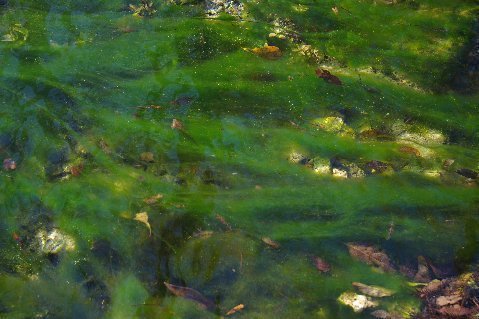
Because of reduced aquifer flow and nutrient loading, algae is replacing the Submerged Aquatic Vegetation SAV which wildlife depend on to survive.
Fertilizer: Phosphates/Nitrates
Plant nutrients nitrates and phosphates feed the algal blooms which kill off native aquatic plants; the food source to local wildlife.What we are doing and how you can help:
- Promoting Aquifer Friendly gardening through our outreach programs
- BMAPS- Basin Management Action Plan is FL-DEP’s response
Mining Threats: Mining processes destroy wetlands and produce toxic waste-streams.
- The mining process destroys vegetative cover and damages intricate water retention and drainage systems, emptying lakes and creating unprecedented flood zones. Creates toxic wastewater.
- Phosphate mine in Hamilton County, Nutrien.
- Creates toxic gypstacks that release toxic chemicals into the air and into our aquifer.
- Titanium and rare earth mine in Bradford County; Chemours.
- Wastewater containing radium and barium are released into the headwaters of our Santa Fe River.
What we are doing and how you can help:
Working with regulatory agencies to press for greater regulation.
Aquatic Invasives- FWC and Diquat
Monitoring mining wastewater spills and notifying environmental and regulatory groups.
- Water Hyacinth (Eichhornia crassipes) is one of the fastest growing invasives in our rivers. it forms dense, impenetrable mats which clog waterways, making boating, fishing and almost all other water activities impossible. It also reduces biodiversity by crowding our native plants at the water’s surface and below.
- Water hyacinth is controlled by FWC contractors using Diquat, a broad spectrum herbicide.
- Diquat is toxic to fish and mammals
What we are doing and how you can help:
- Join us on our harvesting events. We pull the invasives so the FWC does not spray herbicides
- We focus on efforts near shoals where plants grow into mats.
- If you own property on the river, talk to us about how you can help
- Tell people about our efforts to stop the spraying of herbicides on our river.
- Become a member of Our Santa Fe River and support our efforts.
2. Consumptive Use: Groundwater withdrawal and MFL’s Minimum Flow Levels
Water bottling
- Seven Springs Water Company pumps nearly 1 million gallons of water per day from the wells at Ginnie Springs Outdoors, LLC., to sell to Nestle/BlueTriton for bottling.
- Water use permitting is supposed to protect our springs and rivers from over-pumping, but it is failing. The permit was approved even though it is clearly not in the public interest to increase pumping from a spring/river system already considered by the state as “in recovery,” a designation given to rivers “experiencing significant harm” to water levels and flow.
What we are doing and how you can help:
- Do not purchase bottled water in single use plastic and encourage your circle of family and friends as well.
- Support Florida Springs Council in their legal challenges to the permit.
- Join OSFR and support our efforts to turn the tide in favor of better protections.
- Sign the single use plastic pledge.
Landscape Irrigation
- 40-60% of household water use goes to irrigating landscapes dominated by turf grass and exotic or non-native plants.
- Soils in our area are typically sandy and have no water retention.
What we are doing and how you can help:
- Encourage landscaping with native plants adapted to our heat and are drought tolerant.
- Eliminate lawns.
- Adopt soil building practices such as mulching.
3. Loss of Recharge areas
Protecting surface waters, wetlands and groundwater requires us to avoid developing in high recharge areas.
- Preserve open space
- Retain tree canopy and native landscapes
- Minimize building footprint
- Minimize total impervious area
What we are doing and how you can help:
- Speak out against high density developments in vulnerable recharge areas such as along the Ichetucknee Trace and around Mill Creek Sink.
- Support the efforts of land protection agencies like Alachua Conservation Trust, Florida Forever,
Get in on the Conversation