

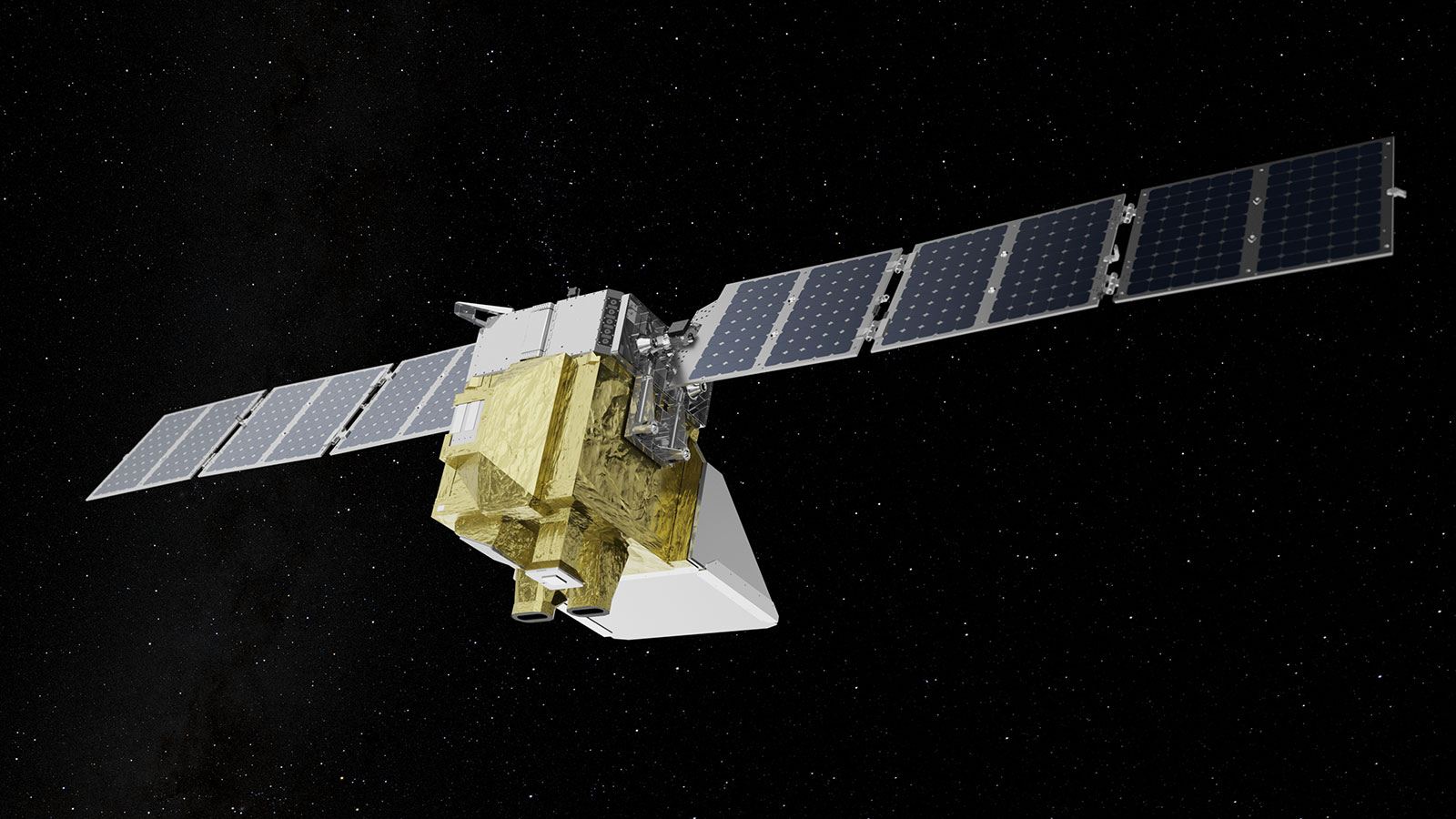
MethaneSAT has been in development for more than six years and cost roughly $88 million. It is about the size of an oven.
Courtesy of Environmental Defense Fund
Now that the oft-denied science predictions of climate change due in part to man-made greenhouse gasses are becoming manifest in more frequent and severe storms, this flaw in the EPA has become more significant.
Read the original article here in Grist.
Spying from space: How satellites can help identify and rein in a potent climate pollutant
Methane levels in the atmosphere are rising. An armada of satellites could help identify leaks from oil fields, landfills, and animal feed operations.

On a blustery day in early March, the who’s who of methane research gathered at Vandenberg Space Force Base in Santa Barbara, California. Dozens of people crammed into a NASA mission control center. Others watched from cars pulled alongside roads just outside the sprawling facility. Many more followed a livestream. They came from across the country to witness the launch of an oven-sized satellite capable of detecting the potent planet-warming gas from space.
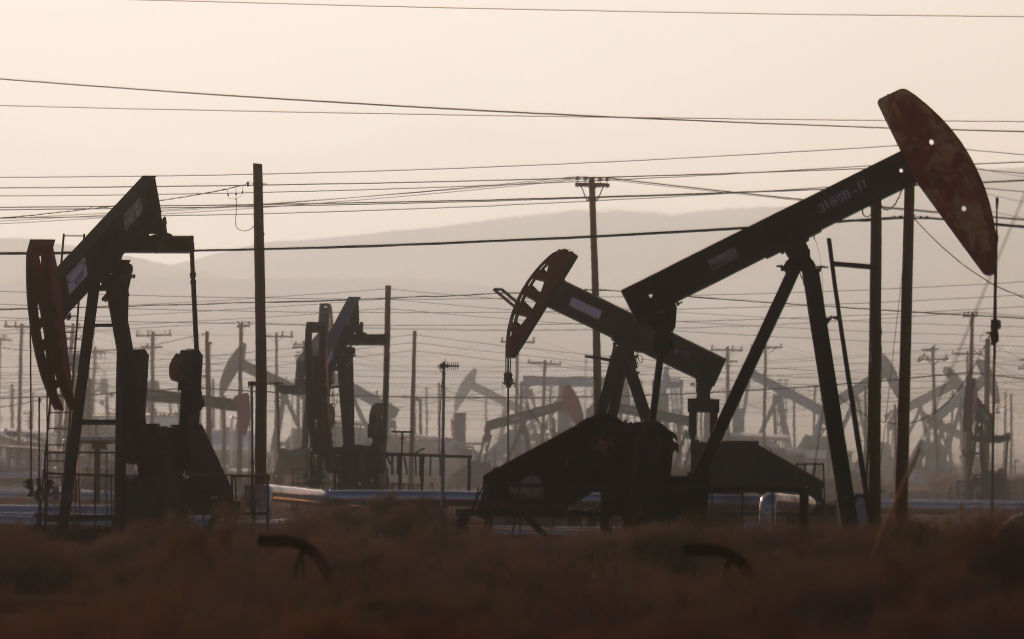
The amount of methane, the primary component in natural gas, in the atmosphere has been rising steadily over the last few decades, reaching nearly three times as much as preindustrial times. About a third of methane emissions in the United States occur during the extraction of fossil fuels as the gas seeps from wellheads, pipelines, and other equipment. The rest come from agricultural operations, landfills, coal mining, and other sources. Some of these leaks are large enough to be seen from orbit. Others are miniscule, yet contribute to a growing problem.
Identifying and repairing them is a relatively straightforward climate solution. Methane has a warming potential about 80 times higher than carbon dioxide over a 20-year period, so reducing its levels in the atmosphere can help curb global temperature rise. And unlike other industries where the technology to decarbonize is still relatively new, oil and gas companies have long had the tools and know-how to fix these leaks.
MethaneSAT, the gas-detecting device launched in March, is the latest in a growing armada of satellites designed to detect methane. Led by the nonprofit Environmental Defense Fund, or EDF, and more than six years in the making, the satellite has the ability to circle the globe 15 times a day and monitor regions where 80 percent of the world’s oil and gas is produced. Along with other satellites in orbit, it is expected to dramatically change how regulators and watchdogs police the oil and gas industry.
“Companies do a good job of complying with the law, but the law has been insufficient,” said Danielle Fugere, president and chief counsel at As You Sow, a nonprofit group that has used shareholder advocacy to push fossil fuel producers to tackle climate change. “So this change will increase incentives for reducing methane emissions.”
Those at Vandenberg or watching online were a bit on edge. A lot could go wrong. The SpaceX rocket carrying the satellite into orbit could explode. A week before, engineers worried about the device that holds the $88 million spacecraft in place during launch and pushes it into space. “That made us a little nervous,” recalled Steven Wofsy, an atmospheric scientist at Harvard University and a key architect of the project along with Steven Hamburg, the scientist who leads MethaneSAT at EDF. If that didn’t go wrong, the satellite could still fail to deploy or have difficulty communicating with its minders on Earth.
They needn’t have worried. A couple hours after the rocket blasted off, Wofsy, Hamburg, and his colleagues watched on a television at a hotel about two miles away as their creation was ejected into orbit. It was a jubilant moment for members of the team, many of whom had traveled to Vandenberg with their partners, parents, and children. “Everybody spontaneously broke into a cheer,” Wofsy said. “You [would’ve] thought that your team scored a touchdown during overtime.”
The data the satellite generates in the coming months will be publicly accessible — available for environmental advocates, oil and gas companies, and regulators alike. Each has an interest in the information MethaneSAT will beam home. Climate advocates hope to use it to push for more stringent regulations governing methane emissions and to hold negligent operators accountable. Fossil fuel companies, many of which do their own monitoring, could use the information to pinpoint and repair leaks, avoiding penalties and recouping a resource they can sell. Regulators could use the data to identify hotspots, develop targeted policies, and catch polluters. For the first time, the Environmental Protection Agency is taking steps to be able to use third-party data to enforce its air quality regulations, developing guidelines for using the intelligence satellites like MethaneSAT will provide. The satellite is so important to the agency’s efforts that EPA Administrator Michael Regan was in Santa Barbara for the launch as was a congressional lawmaker. Activists hailed the satellite as a much-needed tool to address climate change.
“This is going to radically change the amount of empirically observed data that we have and vastly increase our understanding of the amount of methane emissions that are currently happening and what needs to be done to reduce them,” said Dakota Raynes, a research and policy manager at the environmental nonprofit Earthworks. “I’m hopeful that gaining that understanding is going to help continue to shift the narrative towards [the] phase down of fossil fuels….”
The European Space Agency released the first global measurements of atmospheric methane three years after launching the Environmental Satellite, or Envisat, in 2002. In 2009, three years before the Envisat mission ended, Japan’s Greenhouse Gases Observing Satellite, or GOSAT, made its orbital debut. These early progenitors established a new era of worldwide emissions accounting, but they lacked the geographic precision required to inform meaningful action.
In the years since, a hodgepodge of governmental agencies and private-sector organizations has deployed 23 more satellites, including MethaneSAT, to glean additional insights. Some improved upon the pioneering technology by mapping global emissions with greater fidelity and surveying the world with what one could call a wide-angle view. But most measure emissions in targeted areas with what amounts to a telephoto lens.
The images they collect, however, are nothing like what a Nikon might capture, because methane, like most gases, is invisible to humans. So these satellites rely on a spectrometer to reveal the infrared signature the gas leaves behind, exposing not only its presence, but its concentration.
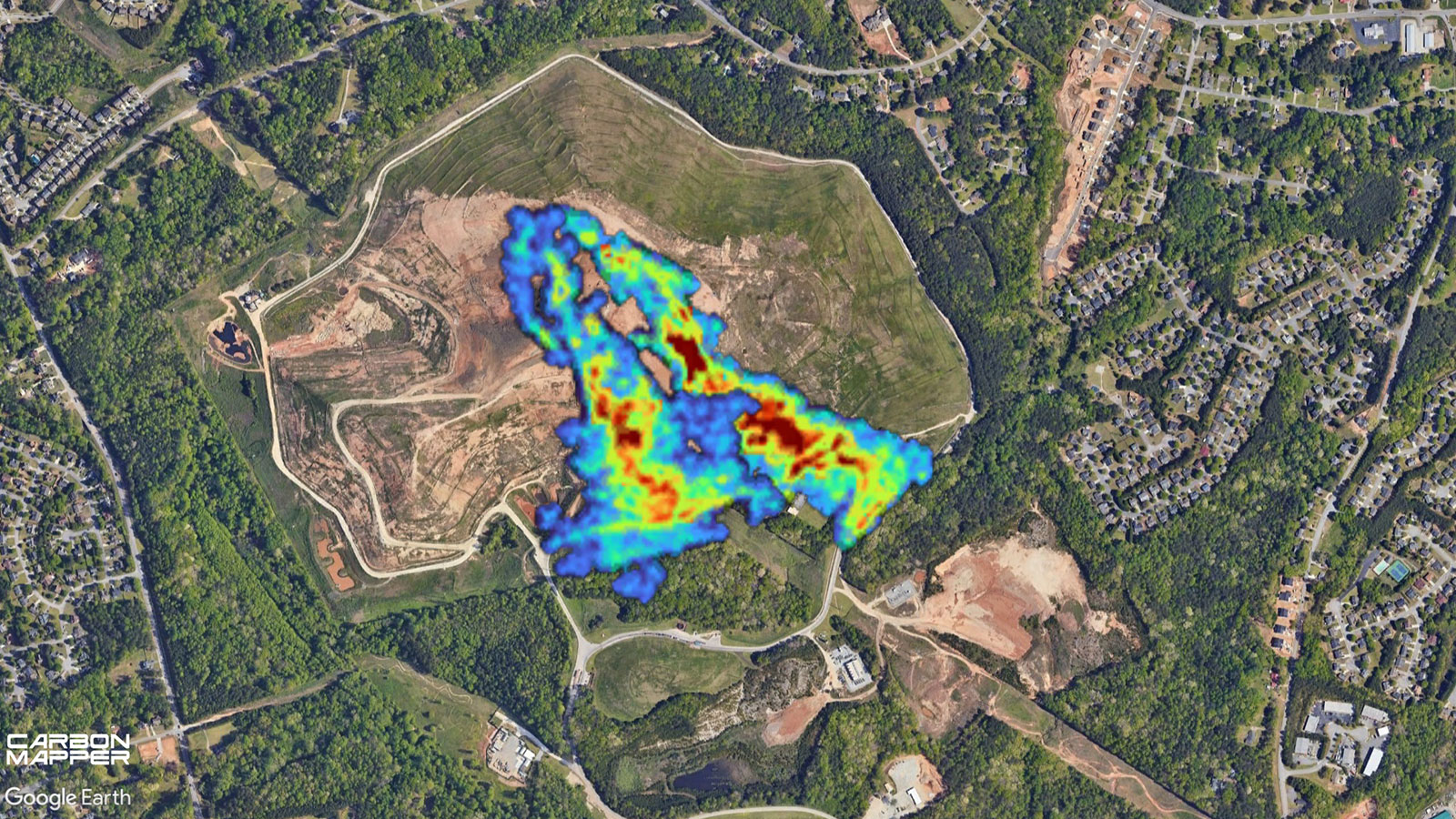

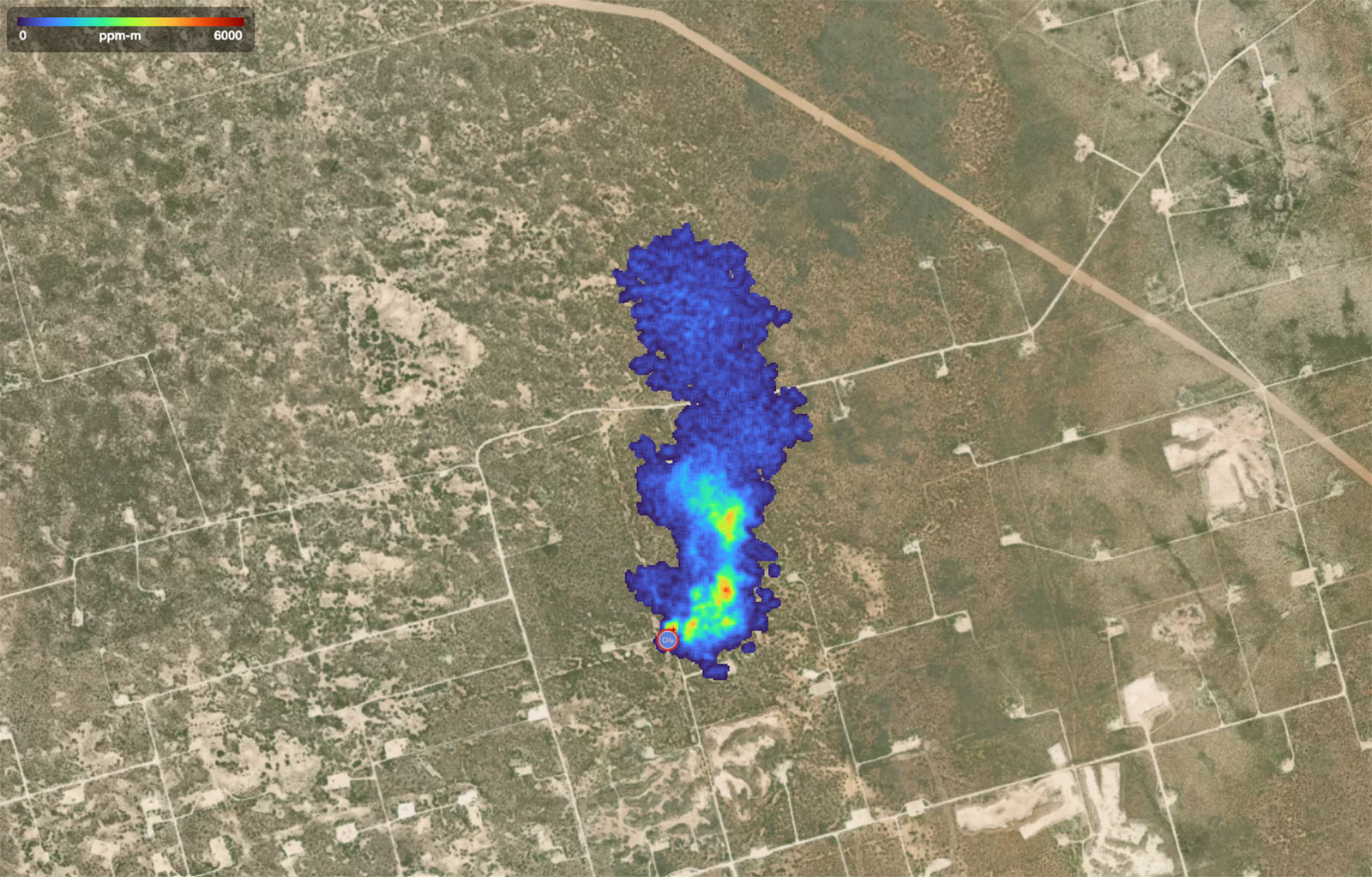
How large a chunk of the world a satellite can map, and the resolution it can provide, depends primarily upon the magnifying power of its telescope. Typically, a higher magnification allows the examination of smaller areas in greater detail, while a lower magnification is best for analyzing vast areas in less detail. The instruments aboard each satellite have all been designed with a unique combination of sensitivities and resolutions tailored to its primary mission. Given GOSAT, for example, was designed to track methane and greenhouse gas concentrations over the entire planet in coarse resolutions, it would have no trouble measuring methane emissions across Southern California and beyond, but it would condense Santa Monica into a single pixel. On the other hand, with the privately owned GHGSat focused on taking images of precise areas and identifying the facilities responsible for emissions, its satellites could map the city of Santa Monica in exquisite detail and pinpoint a sizable methane leak to within 80 to 160 feet, but would struggle to provide any indication of what’s happening beyond the city.
EDF saw an opportunity to create a satellite capable of doing both by designing MethaneSAT’s instrument to take images that cover 125 miles of Earth’s surface, enough to capture most of an oil field spanning dozens of miles in a single frame with sufficient resolution to identify small groups of wells and other infrastructure within that expanse. The nonprofit and its researchers began to see the need for such a device about a decade ago, at the height of the fracking boom. The organization was coordinating the work of hundreds of scientists who “were creating more data about methane emissions from the oil and gas industry in the U.S. than anyone had,” Hamburg said, “by orders of magnitude.”
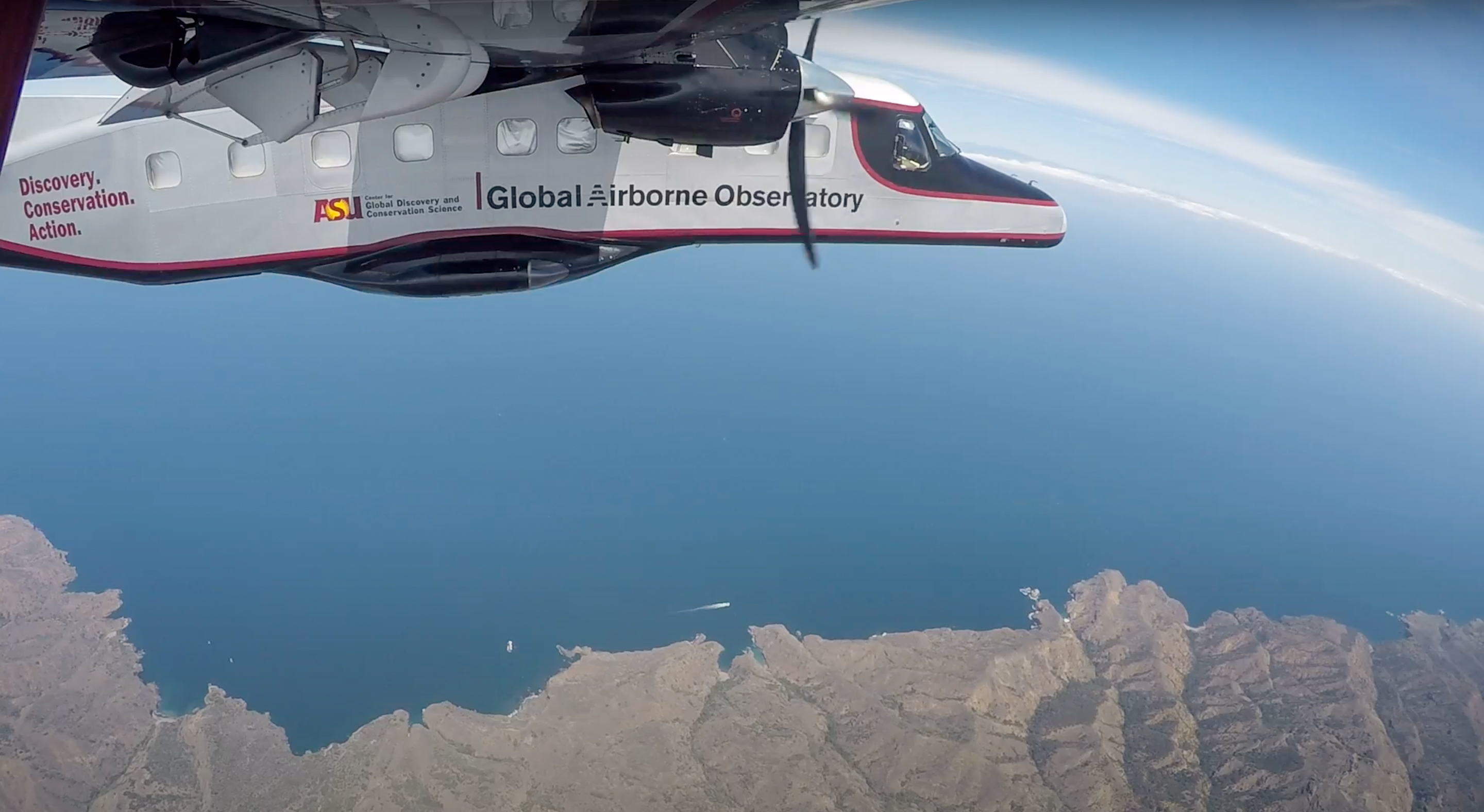
EDF flew spectrometers aboard airplanes over oil fields, and discovered that the EPA had severely underestimated the amount of methane emitted by oil and gas operations. Although these studies proved invaluable, the scientists couldn’t conduct these labor-intensive, aerial campaigns at the scale or frequency required to understand global methane emissions and how they evolved. That piecemeal approach made clear that no one understood the extent of the problem. Even for the areas they could image, “you’re getting snapshots,” Hamburg said, “but not a motion picture.”
Hamburg and his colleagues set out to determine what it would take to monitor the world’s most productive oil fields on a near-daily basis to determine where, and how much, methane escaped and how those emissions were changing over time. “We’d done enough looking,” Hamburg said, “that we didn’t think the existing satellites or the planned satellites were going to provide that data.”
As they pondered how to fill this gap, Robert Harris, EDF’s lead scientist until his passing in 2021, encouraged Hamburg to get in touch with Wofsy. Wofsy had promised himself he would never get involved in a satellite mission, but the prospect of the measurements this one could collect became too tantalizing to pass up. The more the two Stevens came together to talk and “mind meld,” Hamburg said, the more they realized they shared a vision for a mission that could slot neatly between wide-angle global mappers and the telephoto point imagers, filling a gap that, until then, no one had aimed to address.
The ability to measure emissions across large areas and identify the worst polluters could reshape how regulators design policy. In recent years, climate scientists and activists have spotlighted “super emitters” — large leaks spewing a disproportionate amount of methane. But EDF’s research has shown that focusing on gross polluters risks overlooking the cumulative contributions of small, persistent leaks. In 2022, its researchers found that although low-production oil and gas wells produce just 6 percent of the nation’s fossil fuels, they generate around half of the industry’s methane emissions. That is despite releasing pollution at less than one-tenth the rate of even the smallest super emitters. The data coming from EDF’s new satellite will be able to help quantify and constrain the emissions coming from gross polluters and smaller sources alike — something that will prove invaluable.
“MethaneSAT will play a very crucial role with advocacy and policymaking,” by showing not only a given region’s total methane emissions, but how that changes over time, said Jean-Francois Gauthier, a senior vice president at GHGSat, which operates 12 of its own methane-monitoring satellites and markets services and data to both the public and private sectors, including fossil fuel companies. “Now you can start having very targeted policies and regulations.”
Given the sophistication of tools like MethaneSAT and the four satellites GHGSat plans to add to its flotilla later this year, it is ironic that the EPA’s current enforcement strategy is fairly low tech. The agency requires the fossil fuel industry to report its own emissions and augments that data with occasional aerial surveillance — an approach that limits it to capturing emissions for a specific period of time over a limited area. Oil and gas operators must estimate the emissions from their equipment, but the methodology is largely based on outdated data, and they aren’t required to report large releases due to malfunctions.
Courtesy of Environmental Defense Fund
As a result, the EPA is underestimating the scale of methane emissions from the oil and gas sector by as much as 76 percent, according to researchers. Shayla Powell, an EPA representative told Grist that the discrepancies between the agency’s analysis and satellite-based estimates may stem from the needto draw national conclusions from local observations. Super-emitters “may not be accurately captured using current methods,” the representative said. “EPA continues to work with researchers to compare results, identify specific sources of discrepancies, and make improvements.”
Recognizing the global reach and nearly real-time coverage that satellites can provide, the EPA plans to capitalize on all that data. Its new Superemitter Program will allow certified third parties to provide the agency with data documenting leaks. It will then reach out to the company responsible for the emissions, which will have five days to open an investigation and 15 days to report to the EPA. A provision in the Inflation Reduction Act directs the EPA to charge $900 per metric ton of methane released beyond a certain threshold. The trove of information coming back from space can help the agency measure how much operators are spewing.
The EPA places strict detection and resolution requirements on the data it will accept, but even if one firm’s satellite can’t take photos that meet those guidelines, its findings could inform the work of others and provide the agency with actionable information. “In the space business, it’s called ‘tip and cue,’” said Riley Duren, who leads Carbon Mapper, a nonprofit dedicated to measuring planet-warming emissions. “If one satellite sees something, it can tip off another one and they can queue up measurements to follow up.”
But whether all the data will ultimately help reduce methane emissions remains an open question. For years, Sharon Wilson, a self-proclaimed methane hunter and director of the environmental group Oilfield Witness, has been scouring oil and gas fields nationwide and documenting massive leaks. She uses an optical gas imaging camera, which makes the invisible emissions visible, to document how fossil fuel operators have been flaring natural gas with impunity. Over the last eight years, she has submitted more than 500 complaints with video evidence of leaks in the Permian Basin in West Texas and other oil fields to the Texas Commission on Environmental Quality, the agency responsible for enforcing environmental rules in the state. It has rarely taken action. Wilson worries that any satellite data will similarly be dismissed.
“The bottom line on this whole thing is it doesn’t matter how many thermographers we have, boots on the ground, satellites flying in the air, people with drones and airplanes and all the other technology, none of it matters if you don’t stop methane,” Wilson said. “None of it counts.”
If operators fail to take action after being notified through the EPA’s Superemitter Program, it’s unclear whether enforcement action will fall to the states. The EPA has delegated responsibility for enforcing parts of the Clean Air Act to states, which has led to disparities in accountability. The new methane rules finalized by the EPA late last year require states to develop an implementation plan. If state plans are inadequate, the agency is expected to roll out a federal one. When the EPA has taken this approach with other pollutants such as smog, states like Texas and Louisiana have often submitted inadequate implementation plans.
How the EPA chooses to follow through may not be clear for a couple more years. The agency is currently vetting those interested in submitting methane data. Publication of any data third parties provide may not occur until 2026, at which point the EPA will need to take appropriate action against polluters.
“You don’t just need people to collect the data attributed to an operator or a facility,” said Raynes, the Earthworks researcher. “You also need people who are actually going to follow through to make sure that that operator fixes the problem. There’s a little less clarity in all of [this] about whether that’s being accurately planned for.”
Satellites — no matter how sophisticated — have limitations, and the responsibility to take action falls to regulators. Ultimately, having more granular data makes it more difficult for oil and gas companies and regulators to deny that leaks exist. “Having that greater access to that finer level of actual, empirically-observed measurement is going to change the conversation about methane,” said Raynes.
This article has been updated to clarify that the images of the methane leaks in Georgia, Louisiana, and Texas were captured by Carbon Mapper.


