
The current administration in Washington favors industry over a healthy planet.
Sounds a lot like the DEP in Florida.
Read the original article here at Reuters.
Comments by OSFR historian Jim Tatum.
jim.tatum@oursantaferiver.org
– A river is like a life: once taken,
it cannot be brought back © Jim Tatum
Tough US stance casts gloom over plastics pollution deal after Geneva flop
GENEVA, Aug 15 (Reuters) – The collapse on Friday of a sixth round of U.N. talks aimed at curbing plastic output has dimmed hopes of tackling a key source of pollution and left many advocates of restrictions pessimistic about a global deal during the Trump administration….
Many states and campaigners blamed the failure on oil-producers including the United States, which they said hardened long-held positions and urged others to reject caps on new plastic production that would have curbed output of polymers.
Debbra Cisneros, a negotiator for Panama, which supported a strong deal, told Reuters, the United States, the world’s number two plastics producer behind China, was less open than in previous rounds conducted under Joe Biden’s administration.
“This time they were just not wanting anything. So it was hard, because we always had them against us in each of the important provisions,” she said at the end of the 11-day talks.
Anti-plastic campaigners saw little hope for a change in Washington’s position under President Donald Trump, who in February signed an executive order encouraging consumers to buy plastic drinking straws.
“The mentality is different, and they want to extract more oil and gas out of the ground,” said Bjorn Beeler, International Coordinator at International Pollutants Elimination Network (IPEN), a global network of over 600 public interest NGOs.
The U.S. State Department did not immediately respond to a request for comment about its positions and its role in the talks. U.S. delegate John Thompson declined to respond to questions from a Reuters reporter on the outcome.
A State Department spokesperson previously said that each party should take measures according to its national context, while Washington has expressed concerns that the new rules could increase the costs of all plastic products. The Trump administration has also rolled back various U.S. climate and environmental policies that it says place too many burdens on national industry.
Earlier this week, Washington also flexed its muscle in talks about another global environmental agreement when it threatened measures against states backing a proposal aimed at reducing shipping emissions.
For a coalition of some 100 countries seeking an ambitious deal in Geneva, production limits are essential.
Fiji’s delegate Sivendra Michael likened excluding this provision to “mopping the floor without turning off the tap.”
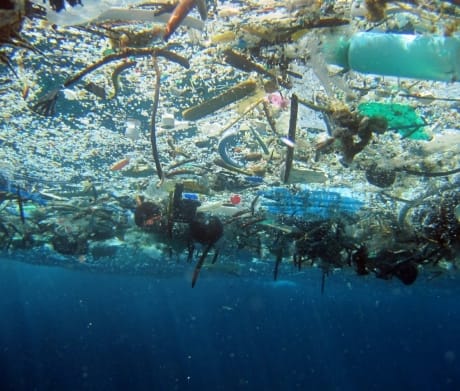
For each month of delays, the World Wildlife Fund (WWF) said nearly a million tons of plastic waste accumulates – some of which washes up on the beaches of island states.
‘CONSENSUS IS DEAD’
Some participants also blamed organisers, the International Negotiating Committee (INC), a U.N.-established body supported by the U.N. Environment Programme (UNEP).
A low point was a formal meeting an hour before the negotiations were set to conclude at midnight on Thursday which lasted less than a minute and was then adjourned until dawn, prompting laughter and jeering from delegates.
“Everyone was in shock as no one understood,” said Ana Rocha, Global Plastics Policy Director for environmental group GAIA. “It’s almost like they were playing with small children.”
France’s ecology minister Agnes Pannier-Runacher called proceedings “chaotic.”
Asked what went wrong, INC chair Luis Vayas Valdivieso blamed the rift between countries and called the negotiations complex. “But we have advanced and that’s important,” he said.
U.N. provisional rules require all states to agree – a constraint that some see as unworkable, especially under a U.S. administration that is retreating from multilateralism.
“Consensus is dead. You cannot agree a deal where all the countries who produce and export plastics and oil can decide the terms of what the deal is going to be,” said IPEN’s Beeler.
Some delegates and campaigners suggested introducing voting to break the deadlock or even for the U.N.-led process to be abandoned altogether. The WWF and others called on ambitious states to pursue a separate deal, with the hope of getting plastics-producing nations onboard later.
Two draft deals emerged from the talks – one more ambitious than the other. Neither was adopted. It is unclear when the next meeting will take place, with states merely agreeing to reconvene at a later date.
One positive development was that top plastics producer China publicly acknowledged the need to address the full-life cycle of plastics, said David Azoulay, Managing Attorney of the Center for International Environmental Law’s Geneva Office. “This is new, and I think this opens an interesting door.”
Reporting by Olivia Le Poidevin and Emma Farge; Additional reporting by Valerie Volcovici in Washington and Hansen Holger in Berlin Editing by Dave Graham and Tomasz Janowski