


The original plan of this water transfer spoke of taking water from Black Creek only during flood periods when there was too much water in the creek. Lately that has not been mentioned and they are now talking of ten million gallons daily, something we expected all along.
Water transfers rarely work because if you take water from one location to help another, there will be a negative impact from the first location. No one is mentioning that here.
Another aspect not expressed here is the fact that the major cause of the Keystone Lakes water levels dropping is the huge cone of depression caused by the tremendous groundwater pumping to supply Jacksonville. Before these withdrawals the Keystone Lakes had much higher water levels.
This water transfer is a political boondoggle and a waste of taxpayer money.
Other than giving the St Johns River Water Management District something to do and some reason for existence, little good can ensue from this project.
Read the complete article here in Clay Today.
Comments by OSFR historian Jim Tatum.
jim.tatum@oursantaferiver.org
– A river is like a life: once taken,
it cannot be brought back © Jim Tatum
Posted
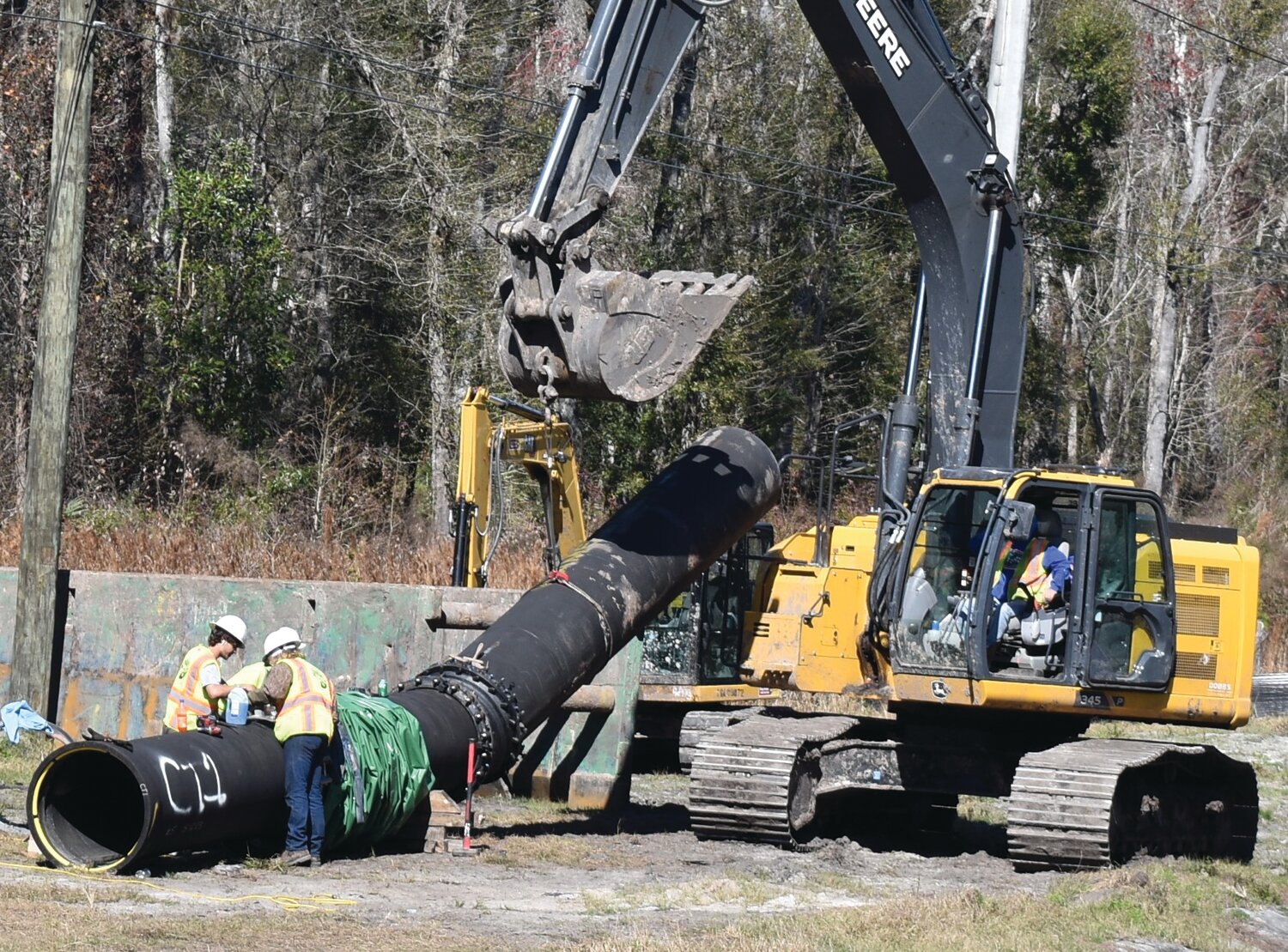
KEYSTONE HEIGHTS – The throaty sound of a crane is often muffled by the constant whir of traffic 30 yards away along State Road 21. But with each burst of power and belch of diesel smoke, another 15 feet of the Black Creek Restoration Project is completed.
There haven’t been any significant setbacks. Soon, the $118 million project will be operational to send as much as 10 million gallons of excess water daily 17 miles from the South Fork of Black Creek to Alligator Creek and into lakes Brooklyn and Geneva. At the current pace, the lakes, once considered luxurious weekend playgrounds for affluent Jacksonville families, will finally lap what used to be their natural shorelines.
“I’m very pleased with the progress that they’re making,” said Save Our Lakes Organization President Vivian Katz-James. “I think later this year, they’ll have the filtration system. They’re going to do some testing once they get all the pipes down. We’re probably looking at getting the water flowing into Alligator Creek next year. If so, that would be incredible.”
The restoration project seemed like a pipe dream for nearly 40 years, but it’s quickly becoming a reality as crews wrap up construction of a massive pump station at Black Creek and State Road 16. Simultaneously, other workers are installing 17 miles of underground pipes along SR 16 and SR 21 to channel water to a 21-acre drain treatment filtration field northwest of Keystone Heights. That facility will filter tannins and phosphorus from the brownish waters of Black Creek before going into Alligator Creek, which feeds into both lakes Brooklyn and Geneva….
The Lake Region was founded by residents from the Northeast who wanted a vacation home that offered a mild climate, fishing, boating and swimming.
Residents around lakes Brooklyn and Geneva have fought for two generations to restore the water in the lakes, which dwindled to historic lows in the past 20 years. Once a vibrant source of water-related activities, years of below-average rainfall, a limestone base that allows water to seep into the Florida aquifer and earthen damns along Alligator Creek kept water from flowing into the lakes.
The Lake Brooklyn Association fought to have the obstructions removed from Alligator Creek, but nearby sand mines, Camp Blanding and development had also affected the lake levels.
In 2022, SJRWMD, Save Our Lakes Organization, officials from the State, County and Keystone Heights, Clay County Utility Authority, Gainesville Regional Utilities, St. Johns Utilities and JEA all worked to complete the Black Creek Water Resource Development Project.
Three days after the announcement, crews started clearing land for the pump station and work hasn’t slowed since.
Once completed, the levels at both lakes Brooklyn and Geneva are expected to rise by at least 10 feet. The pumping project will also increase water to the Upper Florida aquifer by percolating through the lake’s bottom.
“Everybody is getting very helpful that the Keystone community will be able to shepherd the growth so that it still has that Florida feel,” Katz-James said. “That’s what I’m hoping for the future.”


My property is located downstream from the bridge at 3667 Jims Ct, 32043. I am concerned that the health of our beloved creek will suffer with over pumping and become a silt ditch. On behalf of myself and neighbors I would like some re-assurance. I sent an email to Michael Daly, November 2, 2023, with an out of office reply. I requested information pertaining to the depth at Highway 16 pumping would begin and end. I have not received a reply.