

The people who run the State of Florida have said time and again that they want to promote business and not waste money but by refusing to remove this dam they are doing economic harm to the state. Objective studies indicate that removal of the dam would increase the economy of the region, plus the yearly maintenance fees would be eliminated.
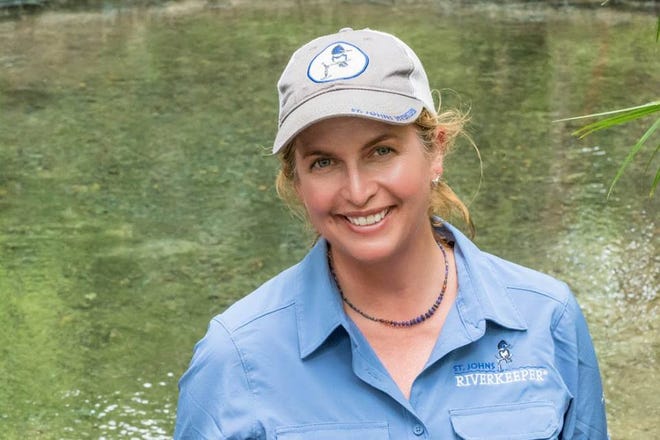
The many other reasons for removal are outlined by RiverKeeper Lisa Rinaman in the article below.
The St Johns River Water Management District, hampered by weak leadership and ethics charges, has not stepped forward to push for removal and has thus lost an important opportunity to help conserve its water resources.
WaterKeeper Rinaman has been a constant and positive force for the environment and especially the St Johns, Silver and Ocklawaha rivers.
Read the entire article here in the Jacksonville Times Union.
Comments by OSFR historian Jim Tatum.
jim.tatum@oursantaferiver.org
– A river is like a life: once taken,
it cannot be brought back © Jim Tatum
Guest Column: Time Has Come To Remove Rodman Dam and Restore the Ocklawaha
January 16, 2022
The St. Johns River runs through the heart of Jacksonville and Northeast Florida, shaping our lives and driving our economy. Our river is also one of Florida’s most productive estuaries and the nursery grounds for numerous species of commercially harvested fish and shellfish we love to eat.
Shrimp spawn offshore, but once their eggs hatch, the larvae migrate back to the ideal habitat of the St. Johns estuary to grow and mature. As a result, commercial and sport shrimpers enjoy the river’s bounty between Jacksonville and Palatka.
Blue crabs, the largest fishery in the river, release their eggs in the marine waters near the mouth of the river. Wind and tides will eventually carry the larvae upstream where they will find refuge in the submerged grasses that will nurture them. During the warmer months, blue crabs reach as far south as Lake George.
Now our thriving estuary and fishing economy are at risk. Due to overuse of our aquifer, dredging and increasing saltwater intrusion, the St. Johns’ underwater grasses are disappearing, the cypress forest wetlands are stressed and fish habitat is vanishing within the St. Johns River estuary from Welaka to Palatka to Jacksonville.
More than 50 years ago, the Rodman Dam (now known as the Kirkpatrick Dam) was built across the Ocklawaha River, the largest tributary of the St. Johns, as part of the failed Cross Florida Barge Canal. This resulted in the clearing and flooding of approximately 7,500 acres of floodplain forest, while submerging over 20 springs beneath a massive pool of water that significantly reduced freshwater flow to the St. Johns.
The boondoggle canal project was eventually halted by the federal government, but the dam remains in place after all these years.
The good news is that we have an opportunity to finally breach the dam and allow the Ocklawaha to run free, once again. By reuniting the natural connection of Silver Springs, the Ocklawaha River and the St. Johns, we can restore more than 150 million gallons of fresh water a day to our estuary, improve water quality, offset saltwater intrusion and restore habitat for fish and wildlife in the Lower St. Johns River.
A free-flowing Ocklawaha will also restore a lost migratory pathway used by numerous fish species that migrated between the Ocklawaha River and the South Atlantic Bight. Many species historically migrated far up the St. Johns and into the Ocklawaha River to feed and reproduce, including American shad, striped bass, American eel and mullet….
The science is clear and there is overwhelming public support based on the St. Johns River Water Management Survey conducted in October 2021, where more than 85 percent of the participants expressed a desire to restore the Ocklawaha River.
The time has come to finally restore the largest tributary of our St. Johns River and together, we can unleash the significant ecological and economic benefits of a free-flowing Ocklawaha.
To help save the St. Johns and free the Ocklawaha, visit StJohnsRiverkeeper.org.
Lisa Rinaman, St. Johns Riverkeeper