
BlueTriton continues the bullying in Maine that Nestle made a tradition wherever they went. BlueTriton cares nothing for the springs nor the environment, they only want money.
Read the original article with photos here in the New York Times.
Comments by OSFR historian Jim Tatum.
jim.tatum@oursantaferiver.org
– A river is like a life: once taken,
it cannot be brought back © Jim Tatum
Inside Poland Spring’s Hidden Attack on Water Rules It Didn’t Like
When Maine lawmakers tried to tighten regulations on large-scale access to water, the brand’s little-known parent company set out to rewrite the rules.
When Maine lawmakers tried to rein in large-scale access to the state’s freshwater this year, the effort initially gained momentum. The state had just emerged from drought, and many Mainers were sympathetic to protecting their snow-fed lakes and streams.
Then a Wall Street-backed giant called BlueTriton stepped in.
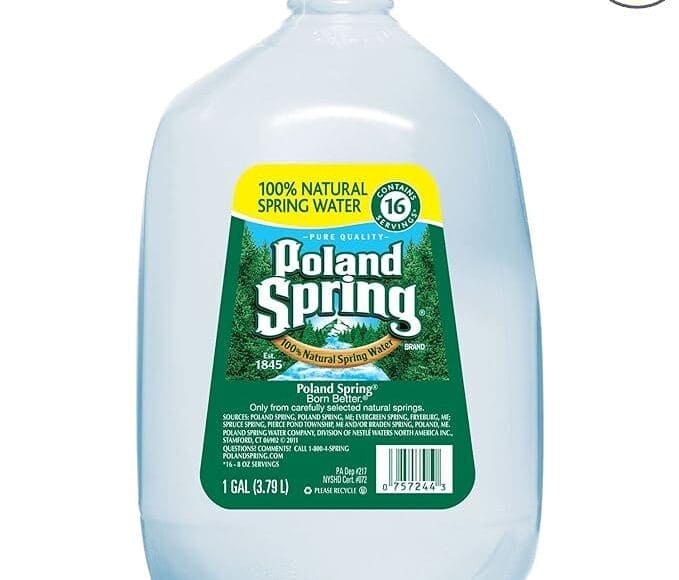
BlueTriton isn’t a household name, but its products are. Americans today buy more bottled water than any other packaged drink, and BlueTriton owns many of the nation’s biggest brands, including Poland Spring, which is named after a natural spring in Maine that ran dry decades ago.
Maine’s bill threatened BlueTriton’s access to the groundwater it bottles and sells. The legislation had already gotten a majority vote on the committee and was headed toward the full Legislature, when a lobbyist for BlueTriton proposed an amendment that would gut the entire bill.
“Strike everything,” starts the proposed amendment, which was written in a Word document that contained a digital signature showing that it had been created by Elizabeth M. Frazier, who represents BlueTriton and is one of the most influential lobbyists in Maine. The document was emailed by Ms. Frazier to lawmakers in the days after the committee vote.
After BlueTriton’s intervention, the committee pulled the bill back. The company’s actions, which haven’t previously been reported, were described to The New York Times by three state legislators. The Times also reviewed several of the emails sent by Ms. Frazier as well as the Word document.
“We couldn’t believe it. Their amendment strikes the entire bill,” said Christopher Kessler, a Democratic state representative who represents South Portland and a committee member who voted to advance the bill. “Because all this happened behind closed doors, the public doesn’t know that Poland Spring stalled the process.”
His panel, the Committee on Energy, Utilities and Technology, plans to meet on Wednesday to discuss the fate of the bill.
Bottlers have faced increasing scrutiny for the millions of throwaway plastic bottles they produce, the marketing message that their products are safer or healthier than tap water, and for a business model in which they buy freshwater, often at low cost, only to sell it back to the public at much higher prices.
And while the bottled-water business doesn’t use nearly as much groundwater as the nation’s thirstiest industries, like agriculture, the pressure on bottlers is building as awareness grows of the stress that intensive pumping can place on local water supplies. A Times investigation this year revealed that many of the aquifers that supply 90 percent of the nation’s water systems are being severely depleted as overuse and global warming transform fragile ecosystems.
BlueTriton has been caught up in issues of local opposition and water use, and not only in Maine. The company also is fighting for access to water sources in numerous states, including Michigan, Colorado and others.
In response to detailed questions, BlueTriton on Monday pointed the The Times to a new page on its corporate website. “After thoughtful consideration, BlueTriton opposes the proposed legislation,” the page says, because the bill “would make it unaffordable for any large-scale water purchaser, including Poland Spring, to invest in infrastructure and operations.”
Ms. Frazier didn’t respond to detailed questions.
Groundwater use is regulated by states, not the federal government, which means there is little national coordination, monitoring or management of a vital natural resource. Maine’s bill seeks, among other things, to put a seven-year limit on contracts for large-scale freshwater pumping by corporations that ship water out of Maine, and to make the deals subject to local approval. That would block BlueTriton’s current efforts to lock in contracts up to 45 years long for pumping water.
Industries and other interest groups routinely try to influence lawmaking, and there has been no suggestion that Ms. Frazier violated any rules. But it seemed “unusual procedurally” for a corporation to propose rewriting an entire bill after it had already advanced within the Legislature, said Anthony Moffa, associate professor at the University of Maine School of Law.
State senator Mark Lawrence, a Democrat who heads the committee considering the bill, said the committee would consider amendments proposed by any interested person or party. In Maine, “a lot of the legislation that’s proposed is written by lobbyists, companies, different people like that,” he said.
Mr. Lawrence also said that, at the same time the amendment was proposed, several members had begun to express fresh concerns that the State Legislature would be setting overly stringent curbs on contracts.
Water Clashes Nationwide
BlueTriton finds itself pitted against local water boards, environmentalists and other groups across the country.
In Colorado, environmental groups have been battling a 10-year contract that BlueTriton renewed with a semi-arid county to pump water from the Upper Arkansas River Basin, a region affected by historic drought.