


Few Florida Counties seem to be less caring of their environment than Manatee County. In the past they allowed the phosphate industry to rip up their land and leave a huge pile of radioactive waste (called a gypstack) which has repeatedly polluted its surroundings and killed untold amounts of life in the Gulf of Mexico. The county has complained about this polluting gypstack but at the same time allowed Mosaic to expand operations.
Their boot-licking position before the destructive phosphate industry resulted in the risky and desperate move of disposing of the resulting toxic waste water by using a deep injection well. This unproven method may yet contaminate our aquifer in the future.
More recently the county very unwisely voted to reduce wetland protections which resulted in the article below.
OSFR commends Joseph McClash and wishes the best for his legal challenge. Manatee County should be bolstering their wetlands protections instead of diminishing them.
Read the original article here in the Bradenton Times.
Comments by OSFR historian Jim Tatum.
jim.tatum@oursantaferiver.org
– A river is like a life: once taken,
it cannot be brought back © Jim Tatum
Petition Filed Challenging Reduction of Local Wetland Protections
Former County Commissioner and TBT publisher Joe McClash argues that changes to the local wetland protections are inconsistent with the county’s comprehensive plan and not in the best interest of the general public
MANATEE COUNTY — Former Manatee County Commissioner and TBT publisher Joseph McClash has filed a petition with the Division of Administrative Hearings challenging the county commission’s October vote to amend the county’s Comprehensive Plan reducing local wetland buffer protections to state minimums.
First reported by the Herald-Tribune, the request for a formal administrative hearing on the matter was submitted to DOAH on Nov. 6 by McClash.
Public records show that McClash is asserting that the changes to the local wetland protections are inconsistent with the county’s comprehensive plan, and not in the general public’s best interest.
During a BOCC meeting on Tuesday, Nov. 14, Manatee County commissioners approved a request by the county attorney’s office to retain Tampa-based GrayRobinson Law Firm as outside counsel in the matter. The agenda item was passed on the meeting’s consent agenda.
TBT staff only recently became aware of McClash’s petition with the DOAH when staff reviewed public records on the matter. Reached by phone, McClash confirmed having submitted the challenge.
“For the most part, I have always kept as much separation as possible between the publication and my civic involvement,” McClash told TBT about why he had not alerted our publication’s staff or initiated a press release on the action.
McClash said that the action was not something he necessarily “wanted” to have to do, but believes strongly it was the “right” thing to do.
“Personally, I would rather not have to challenge a government for which I served 22 years as a county commissioner,” said McClash. “However, our environmental decisions are too important to have an elected body decide that our protections should be weakened or reduced.”
The action taken by the commission amended the county’s comprehensive plan’s “Element 3 Conservation, Element 4 Coastal Management,” amending the county’s current local requirements for wetlands mitigation and buffers.
Proponents argue that the changes will significantly loosen requirements for development adjacent to local wetlands. The text amendment effectively defers county-level wetland buffer requirements of 30 feet adjacent to viable wetlands and 50 feet near the county’s most sensitive wetlands adjacent to flowing watercourses, to the minimum required by the state—25 feet average and 15-foot minimum and only near wetlands identified by the state. In addition, the county’s former regulations identified and protected some wetlands that are not even recognized by the state as needing any specific protection or added buffer requirements.
McClash said he filed the request for the administrative hearing because the commission’s decision to lessen the environmental protections lacked scientific justification as well as benefit to the general public….
“The process of administrative hearings is designed for these specific instances where the county might take action without the proper process or information to substantiate or support the action,” McClash summarized.
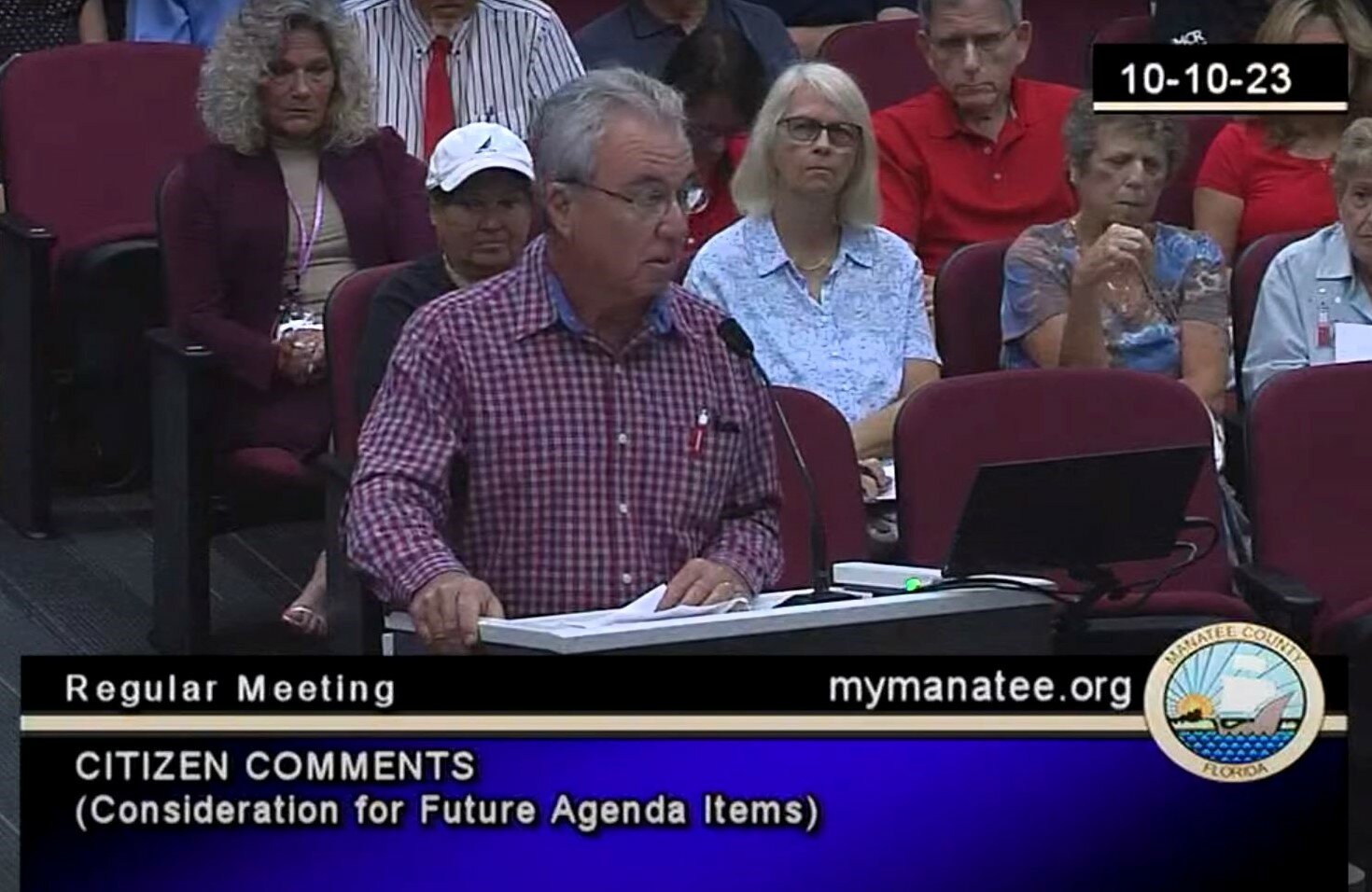
The week following the board’s Oct. 5 vote to amend its comp plan and reduce its local wetland protections, McClash addressed commissioners during public comment requesting they rescind the action.
According to the case docket available on the DOAH website, a hearing is likely to be held in Bradenton, but a date has not yet been set.