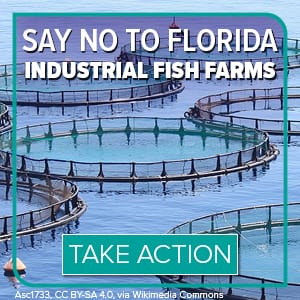

Aquaculture can and has caused many environmental and biological problems. Taking if offshore is no solution, but using tanks on land will eliminate some of the problems. More plant-based foods is a better solution and will happen eventually as we cannot sustain our animal industry as it is today.
Read the original article with many photos here in the Associated Press.
Comments by OSFR historian Jim Tatum.
jim.tatum@oursantaferiver.org
– A river is like a life: once taken,
it cannot be brought back © Jim Tatum
Demand for seafood is soaring, but oceans are giving up all they can. Can we farm fish in new ways?
Aquaculture has been the fastest growing food sector in the world for decades, and people now eat more farmed fish than wild fish
Aquaculture has been the fastest growing food sector in the world for decades, and people now eat more farmed fish than wild fish.
The industry has had to grow. Demand for seafood is soaring and will continue to rise. But the oceans are giving up all they can: Production of wild fish has been flat since about 1990.
EDITORS’ NOTE — This story is part of The Protein Problem, an AP series that examines the question: Can we feed this growing world without starving the planet? To see the full project, visit https://projects.apnews.com/features/2023/the-protein-problem/index.html
And as it has grown, the problems with large-scale farming have grown with it. Many are like problems that face massive chicken, pig and cattle operations. The farms and the waste from them can degrade and pollute nearby ecosystems, diseases can quickly sweep through the tightly packed fish, and gathering the feed for the animals can cause distant environmental problems.
Faced with stinging criticism and tighter regulations — and eager to meet demand — fish farmers are trying new ways to boost production and minimize harm.
AQUACULTURE VILLAGES IN INDONESIA
Indonesia’s rise to become the world’s third-largest producer of farmed seafood brought destruction to nearby shorelines. Mangroves, which protect the coast and act as nurseries for a host of aquatic species, were ripped out.
Untreated waste polluted watersheds. Massive fish die-offs shook local economies.
“Every year we faced the same problem, especially when seasons changed,” said Jono, an aquaculture farmer who like many Indonesians only uses one name. “We had so many dead fish.”
Jono was trained as part of a larger plan by the Indonesian government that will establish over 100 aquaculture “villages” around the country that are designed to reduce the impact of fish farming and expand production.
He’s learned how to better prevent and treat disease, new feeding techniques, better pond construction and proper waste disposal.
“Previously we used to harvest every eight or nine months, now it can be every four to five months,” he said.
CHINA TAKES FISH FARMING OFFSHORE
China, by far the world’s biggest aquaculture producer, is also trying to lessen the environmental impacts of fish farming.
One way: Take it offshore, where currents can deliver clean water and waste can dissipate quickly.
Two kilometers (1.2 miles) off the coast of the city of Yantai in northeast China, three round cages 80 meters (260 feet) across sit below the surface of the sea.
Sea bream, Korean rockfish and other fish wiggle and swim in a mesh made of a durable, lightweight plastic that can withstand extreme weather and keep barnacles at bay.
The facility’s platform is equipped with a monitoring system that constantly senses water temperature, water quality and oxygen levels, said Zhang Zhuangzhi, who is in charge of fish farming at Shandong Ocean Harvest Corporation, which runs the operation.
So far, costs and technical challenges have slowed wide adoption.
A SALMON FISHERY IN A FLORIDA WAREHOUSE
In a warehouse near Miami, large indoor tanks are designed to mimic the natural environment of salmon by establishing the right temperature, the right salinity and the right lighting.
The idea: Grow the salmon indoors to reduce exposure to parasites, warming waters and algae blooms that threaten the fish grown in farms in open waters near shore — and in turn reduce the fish’s impact on the shoreline.
The technology “removes some of the downside that you could have in nature,” said Damien Claire, the chief sales and marketing manager of Atlantic Sapphire, the parent company of Bluehouse Salmon.
Claire said the company doesn’t need to vaccinate or medicate their salmon and has lowered the mortality rate of the fish to around 3% — much lower than the industry average of 20%.
Raising fish in an indoor, tightly controlled environment has also led to other benefits, he said.
The company produces about 3 million salmon a year and hopes to eventually produce 65 million.
It’s a promising model, but not easy to follow because the system relies on an uncommon feature of the groundwater near the warehouse’s location: Salmon need both fresh and salt water, and both are found nearby.
FRENCH FLY FACTORY
When the fish grown in farms are fed wild-caught fish such as sardines and anchovies, a major benefit of fish farms — less stress on ocean ecosystems — can evaporate.
At Innovafeed, based in France, protein-rich black soldier flies are being raised as a feed alternative.
The company chose the fly for three main reasons: It doesn’t get sick, eats almost anything and has a short lifecycle that allows it to be bred and harvested quickly.
“There’s a joke saying that black soldiers fly larvae will eat everything except concrete and steel,” said Nizar El Alami, chief business officer at Innovafeed.
The company’s fly protein is feeding salmon, sea bream, shrimp and other species with food producers across Europe, the Americas and Southeast Asia, according to Alex Diana, a product manager at Innovafeed. It has two factories now and is planning 10 more by 2030 that will produce insect protein for fish, chicken and even pets.
“We are trying to reproduce what happens in nature, but at industrial scale,” he said. “We’re trying to minimize the impact of the food chain on the planet’s resources.”
The Associated Press Health and Science Department receives support from the Howard Hughes Medical Institute’s Science and Educational Media Group. The AP is solely responsible for all content.