
The cost of this industrial boondoggle so far has been 185 million dollars to Florida taxpayers, and death to millions of aquatic lives due to the DEP’s dumping of poisoned waste into the Gulf of Mexico.
Those accountable for this terrible cost are the phosphate mining companies and the Florida DEP. They did not foot the bill; the miners ran away and the DEP pointed fingers, respectively.
There may be added costs which show up years from now, because the cheap/easy-way-out solution was to dump the phosphate industry’s toxic garbage into the ground, where no one knows what will happen.
Dumping poisons into the earth is akin to the centuries-old solution of dumping garbage into creeks and rivers simply because it is out of sight. The earth can take a lot of abuse but scientists today do not know for certain that these poison fluids will not migrate underground and contaminate our fragile, floating lenses that are our aquifers.
We have but one nest to foul and we are heavy on the way to ruining it. Our short-sighted leaders contaminate our Earth in order to save money but no amount of money can buy an aquifer with clean water.
Read the original article with photos here at WUSF.
Comments by OSFR historian Jim Tatum.
jim.tatum@oursantaferiver.org
– A river is like a life: once taken,
it cannot be brought back © Jim Tatum

First pond atop the troubled Piney Point gypsum stack is closed
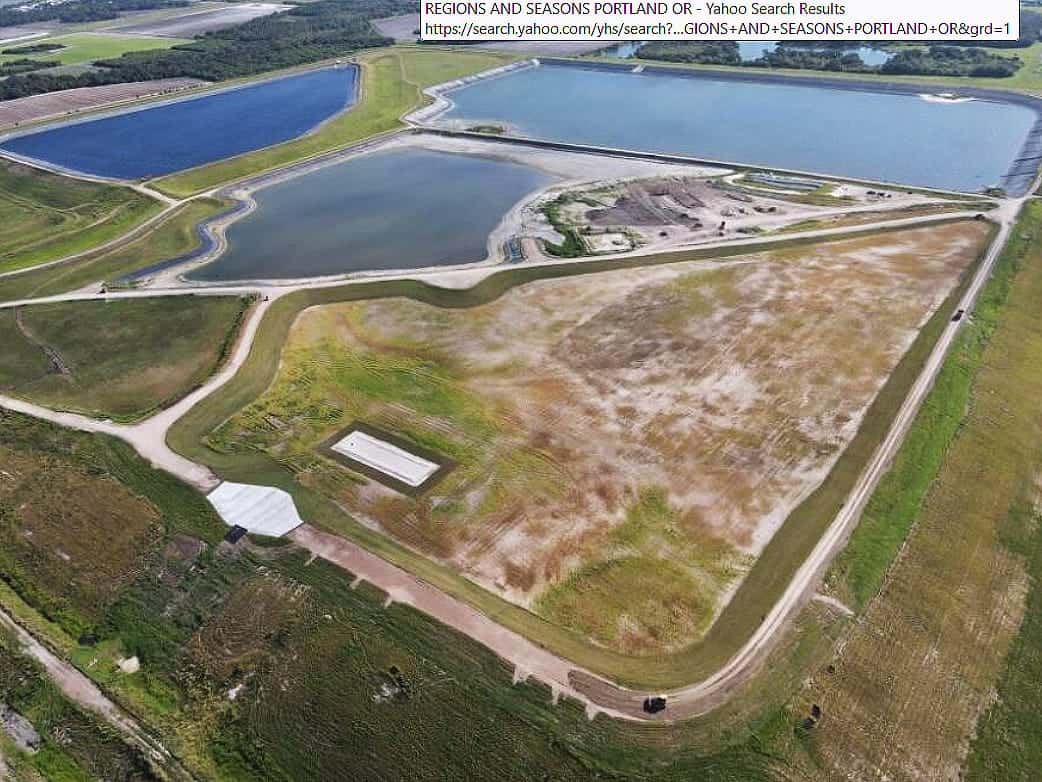
A milestone was reached Thursday, as one of the wastewater ponds atop the Piney Point phosphate plant was closed. This means the troubled plant is one step closer to being closed – forever.
State environmental officials are lauding the closure of what is called the OGS-South compartment area. It is one of four ponds atop the gypsum stack in Manatee County, where a leak in 2021 resulted in the release of more than 200 million gallons of polluted water into Tampa Bay. That was later blamed in part for one of the worst outbreaks of red tide to ever plague the bay.
To get to this point, workers had to remove 270 million gallons of water atop the gypstack, install a new liner, and cover it with soil and grass. Any new rainfall will be routed to a stormwater retention area near the bottom of the stack.
In April, an injection well was dug that will place much of the polluted water from the four ponds deep below the drinking water aquifer. Workers are injecting at least 700,000 gallons of wastewater every day. When the project is completed, about half a billion gallons will have been cleaned and drained.
“I am thankful for the progress we have seen at Piney Point to date – including the work to secure and protect the site during two hurricanes – and am encouraged as the court-appointed receiver has completed this first phase of closure work,” said Shawn Hamilton, secretary of the state Department of Environmental Protection. “DEP looks forward to the receiver’s continued work to expedite the next phase of closure and eventually the full closure of the facility.”
Gov. Ron DeSantis ordered the site be closed after the 2021 spill. So far, the state has spent about $185 million toward the project….