
A huge part of reason our springs are dying is because of excessive pumping from many sources. Florida cannot begin to meet the needs of influxes of population and development. We are living in a pretend world looking for clean water where there is not enough.
In spite of this our water management districts continue to give out groundwater pumping permits to just about anyone who asks for one.
See the original article here in USA Today.
Comments by OSFR historian Jim Tatum.
jim.tatum@oursantaferiver.org
– A river is like a life: once taken,
it cannot be brought back © Jim Tatum
waterway problems
Dams, irrigation, canals can lead to droughts, floods
Kyle Bagenstose
USA TODAY March 12, 2022
Across the United States, a changing climate is dramatically altering waterways, swelling the flow of some rivers and streams while shrinking others to a trickle.
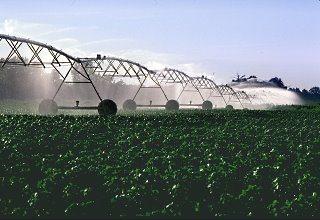
But humans also are significantly contributing to the problem in many watersheds as their use of dams, canals and irrigation systems at times exacerbate the conditions that lead to droughts and floods, according to a study published last month in the journal Nature Sustainability. The findings highlight the need for communities and governments to develop better watershed management strategies to curb the effects of climate change, according to the study’s authors.
The study, written by two researchers at the University of Waterloo in Ontario, Canada, examined changes in water flow in more than 2,000 watersheds across North America from 1950 to 2009. It compared those “managed” through development and infrastructure projects with nearby “natural” watersheds with no such effects. In 44% of the managed watersheds, human activity led to significantly higher or lower water flows, increasing the risk of drought and flooding, the study found.
Nandita Basu, a professor of global water sustainability and ecohydrology at Waterloo and the study’s co-author, said the study took a novel approach by focusing on water flow changes at a seasonal level.
That helped highlight increased risks that might have been missed by earlier studies, which looked at annual averages and found a minimal human impact.
“A lot of the floods and droughts happen seasonally – a summer drought or a spring flood – so we took it down to season,” Basu said. “And we saw that, yes, climate has a big role to play, but in a lot of places humans are magnifying it.”
Basu added the large portion of problem waterways also was unexpected.
“While we knew that humans were modifying systems and things were changing, what was really surprising to us was the large fraction of watersheds in which humans were either increasing droughts or increasing floods,” Basu said.
But the analysis also found in 48% of managed watersheds, water management practices actually had a beneficial effect, reducing the risk of floods or drought. Basu said the double-edged findings emphasize the need for watershed managers to think carefully about their actions.
“The takeaway is that (management) could be a good or a bad thing, depending on how you do it,” Basu said. “Across the country, there are watersheds in which it is done to buffer the climate effect, and in other regions or at other times, it’s done in a way to exacerbate.” The magnitude of the effect can often be significant, the study found. In some Western watersheds, where water scarcity has become an existential problem amid the worst drought in 1,200 years, the effects of irrigation and other management activities can have an effect four or five times worse than climate change alone, the researchers found.
“Dams are built to control flood. And they are doing it somewhat,” said Nitin Singh, a Waterloo postdoctoral fellow and the study’s lead author. “But they’re also storing water so much that it can lead to drought in some seasons.”
About 1 out of every 10 watersheds nationwide saw at least a 167% amplification in the harm from climate because of human management, and about another third saw at least a 20% increase, the researchers found. In the Upper Midwest and Great Lakes region, numerous watersheds saw the greatest increase in flows and flood conditions caused by human management….