
The article may not be recent but the problem will remain indefinitely. Fossil fuel money is heavy in Pennsylvania. Just as the air and water are heavy with their pollutants. The people of that state have suffered too much.
Thanks to Bill Basta for this link.
Read the complete article with photos here in Environmental Health News.
Comments by OSFR historian Jim Tatum.
jim.tatum@oursantaferiver.org
– A river is like a life: once taken,
it cannot be brought back © Jim Tatum
The headaches were alarming too. Cheyenne would hold her head and cry, saying, “My head is stabbing.”
In 2019, Environmental Health News tested the air, water, and urine of Pennsylvania families who lived near fracking wells for contaminants. The investigation found biomarkers for harmful chemicals in the bodies of children living near fracking wells at levels up to 90 times higher than the national average. Cheyenne’s urine sample showed biomarkers indicating exposure to toluene, ethylbenzene, styrene, benzene, and other chemicals used in fracking, which are linked to respiratory, kidney, liver, circulatory, and nervous system problems; skin irritation; and increased cancer risk.
“She’s been poisoned,” Bryant said. “All she does is run around outside with her friends—there’s no reason these things should be in her body.”
Some studies have found that emissions from fracking wells tend to be highest during the drilling phase. Cheyenne’s health problems got better once drilling had been completed. But Bryant worries more wells are coming, and the family can’t afford to move.
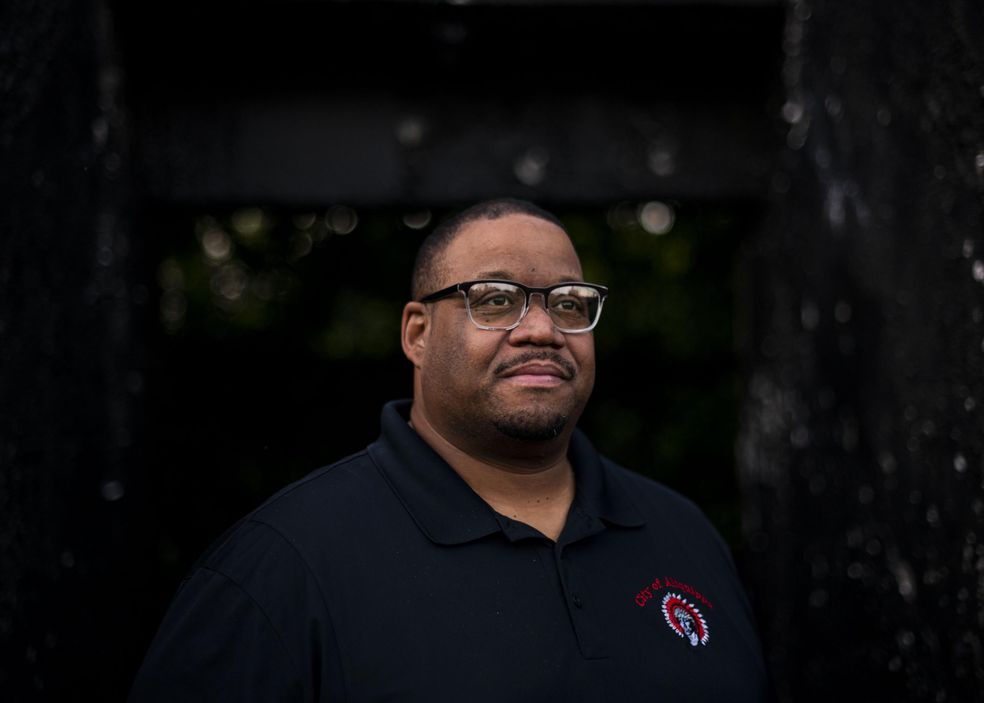
Dwan B. Walker, the mayor of Aliquippa, feels that Shell didn’t consider the opinions of his constituents.
Nate Smallwood for Environmental Health News and Sierra Magazine
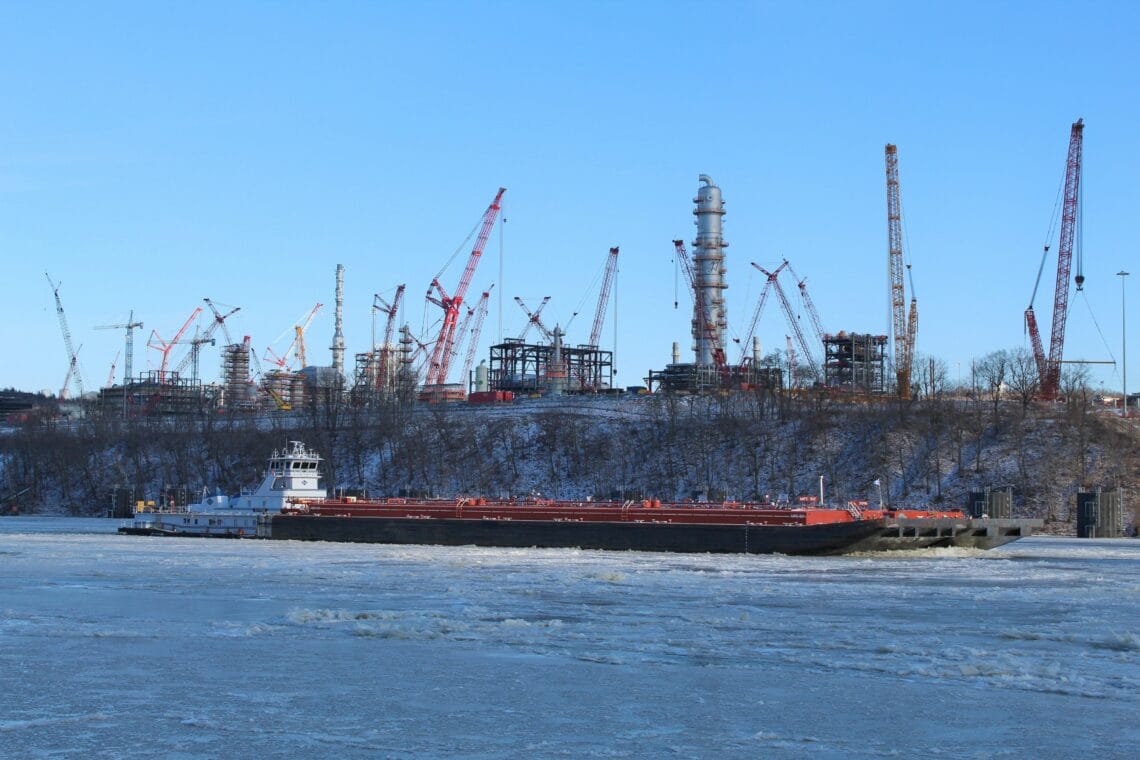
Residents of Allegheny County, which includes Pittsburgh, are about 35 miles away from Potter Township, but they could be just as impacted by Shell’s cracker plant. Home to massive industrial polluters like US Steel and PPG Industries, the county had air that was among the dirtiest in the nation before Shell’s ethane cracker arrived. Yet even though air and water pollution don’t respect geographical borders, residents outside Potter Township were given little say about the plant.
Julie DiCenzo, a retired medical writer, joined the citizens group Communities First–Sewickley Valley because of her concerns about both the cracker plant and the fracking wells that had received permits less than a mile from her home. She started attending town meetings in neighboring Economy Borough, where some fracking wells had already received permits and the shale gas drilling company had plans for more, but as a nonresident, she wasn’t permitted to speak. “Even though it’s in another county, it’s still affecting us,” DiCenzo said.
In addition to holding public educational meetings to raise awareness about the risks from the ethane cracker and fracking, members of Communities First–Sewickley Valley worked to persuade several of the 11 municipalities in the local school district to implement zoning ordinances that would keep oil and gas development as far away from residents as possible, with mixed success. This lack of political power for residents was evident in the permitting process for the Shell ethane cracker too. Residents of the counties surrounding the site regularly packed Potter Township’s community meetings about the plant, but some felt that their opinions didn’t count because they weren’t residents of the township itself.
The plastics plant has also raised concerns about environmental justice. Beaver County is 91 percent white, with a median household income of $59,000 a year and 9 percent of the people living below the poverty line. But within 15 miles of Shell’s plant, there are at least eight communities where residents are more than 30 percent non-white or more than 20 percent of people live in poverty. In Aliquippa, about six miles south of the plant, around 41 percent of the town’s approximately 9,200 residents are non-white and a third are Black. The median annual income is $36,451, and a quarter of its residents live below the poverty line.
When the plant was proposed, the promises to nearby residents were big: a 25-year operating contract, other new businesses in the region, and up to 20,000 direct and indirect jobs. But some Aliquippa residents say those promises remain unfulfilled. “The city hasn’t seen much benefit from the plant so far,” said Dwan B. Walker, who has served as Aliquippa’s mayor for 11 years. Being mayor of Aliquippa is a labor of love—Walker makes just $175 a month doing the job and works for a security company to pay the bills. He decided to run for mayor after his sister was shot and killed in 2009 because he wanted to make his community safer.
Walker, too, went to Shell’s public hearings about the plant but didn’t feel that his opinion or the opinions of his constituents mattered. He still hopes the plant might eventually create downstream manufacturing jobs for the residents of Aliquippa, but he also worries about his community’s and his own family’s health.
In 2021, following President Joe Biden’s executive order on environmental justice, Pennsylvania governor Tom Wolf formally established the Environmental Justice Advisory Board and the Environmental Justice Interagency Council. As it stands, Pennsylvania’s current policy states that environmental justice communities (defined as including “historically and currently low-income communities and communities of color”) should get extra consideration to review permits for polluting facilities. Aliquippa’s proximity to the plant means its air will be significantly impacted by emissions, but the town didn’t get such special consideration during the permitting phase. Nor did any of the other environmental justice communities nearby.
“It’s a weak policy,” said Joe Minott, the executive director and chief counsel for the Clean Air Council. Minott has criticized the DEP for declining to follow its existing environmental justice policies. “It contains very few specifics about how to actually achieve environmental justice, and it’s just a policy right now, not backed up by any regulations, so they’re not even obligated to follow it.”
In 2014, Minott’s group created a detailed report on the expected impacts of the ethane cracker, including increased risk of cancer and respiratory and heart disease, increased traffic, and light and noise pollution. The organization also provided expert witnesses and legal counsel to the community, then took Shell to court. Shell eventually settled on both counts and agreed to provide better pollution controls during flaring and continuous fence-line air monitoring at the plant, accompanied by a public online dashboard where residents can review air-monitoring data.
“They say ‘jobs, jobs, jobs,’ but a lot of legislators stop there in their critical thinking about the benefits of this kind of tax package.” – Sara Innamorato
Walker said residents of Aliquippa have also had concerns about fracking well proposals nearby. “The DEP didn’t hold any meetings with me or the city council to talk about environmental concerns,” he said. “We’d need to have a lot more conversations about that before we let it happen here. I don’t want to be in the grocery store hearing, ‘You let them do what?’ ”
In an attempt to lure Shell to Pennsylvania, the state’s former Republican governor Tom Corbett approved legislation offering Shell an “unlimited tax credit” in 2012, one year after he slashed $1 billion in public education funding. It was one of the largest subsidy packages ever awarded to a company in the United States. Of the 183 state legislators who voted on the bill, just 62 voted against it.
That windfall hasn’t translated into growth for Beaver County. A study by the Ohio River Valley Institute, a nonprofit progressive research organization, concluded that during construction of the plant, Beaver County actually fell behind both the state and the nation in nearly every measure of economic activity. The county’s population has continued to decline, all while registering “zero growth in employment, zero reduction in poverty, and zero growth in businesses—even when factoring in all the temporary construction workers at this site.”
Other research promises that those benefits are still coming. A study commissioned by Shell and published by researchers at Robert Morris University in 2021 projected that once it opened, the ethane cracker would add nearly $4 billion a year to the state’s economy. In Beaver County alone, the report found, the complex would produce $260 million to $846 million in annual economic activity, including wages, benefits, and related spending. Environmental advocates called the report “propaganda” because it didn’t consider subsidies or externalized costs to health and the environment. The true costs and benefits remain to be seen.
It’s difficult to quantify the public health costs of a facility like the ethane cracker, but modeling tools offer a rough idea. According to predictions from the EPA’s CO-Benefits Risk Assessment tool, the plant’s emissions of PM2.5—toxic airborne particulate much tinier than the width of a human hair—are estimated to cost Beaver County an additional $16 million a year in health-care costs. That’s not counting other pollutants like volatile organic compounds and hazardous chemicals. Neighboring Allegheny County can expect about $13 million in additional health-care costs. The national health-care burden is expected to increase by about $70 million a year from pollution that travels from Shell’s plant beyond the area. A DEP spokesperson said that estimating potential health-care costs associated with emissions for a proposed facility is not part of the state’s permitting process.
Republican state senator Elder Vogel Jr., one of the sponsors of the $1.7 billion subsidy the state offered Shell, represents parts of Pennsylvania’s Beaver, Lawrence, and Butler Counties, including Potter Township, where the cracker plant is located. Despite the local opposition, he remains a firm supporter of the facility. “All across the world, people have heard about Beaver County now,” Vogel said. “This Shell plant is putting us on the map.”
When asked whether state legislators considered the public health costs before offering Shell $1.7 billion in tax subsidies, Vogel said, “No, not really. I don’t believe so.”
Nick Muller, a professor of economics, engineering, and public policy at Carnegie Mellon University, coauthored a 2019 study on the environmental and employment impacts of the shale gas boom. It found that the adverse effects on public health almost exactly equaled the economic benefits, and the climate costs subtracted another $12 billion to $15 billion in value, putting the industry’s cumulative economic impact in the red. “The cracker is really only here because of local natural gas and subsidies offered to Shell,” Muller said. “Of course it’s beneficial for the folks who get those jobs, but we shouldn’t just look at a small set of local outcomes when considering these things.”
In Appalachia, examples of the resource curse abound, according to the University of Missouri’s Rebecca Scott. “Appalachia has been culturally marginalized by narratives of backwardness and welfare dependency, like the image of the hillbilly in popular culture,” Scott said. Those harmful stereotypes can make residents more eager to belong in ways that are seen as culturally important, like contributing to the production of energy or essential materials like steel and plastic. “It becomes not only about the community’s ability to have commodities but also its ability to belong, and for its members to have a sense of personal worth.”
This context helps explain why for some Western Pennsylvanians, the Shell plant felt like a godsend. “The Shell construction project put everybody in the unionized construction industry in Beaver County, Allegheny County, and Butler County to work, and then, because of the magnitude of the job, they started pulling in people from farther away,” said Larry Nelson, president of the Beaver County Building and Construction Trades.
Nelson’s organization, which is one of several local chapters of North America’s Building Trades Unions, represents about 20 local construction unions including plumbers, plasterers, painters, sheet metal workers, boilermakers, operating engineers, cement masons, and bricklayers. “Before that job started, just about all the trades had some form of unemployment,” Nelson said. “It helped the unions out greatly.”
Union members receive the same pay and benefits as others in their same profession, regardless of the type of job they’re working on or which client they’re working for, Nelson said. But the Shell project stood out as being one of the safest job sites he’s ever seen. “Workers had something called ‘work stop authority,’ which gives any worker the ability to stand up and say, ‘Wait, something doesn’t look safe. Let’s pause and take another look,’ ” he said. Nelson believes the plant could be a continuing source of employment and that Shell will call on the unions for future projects at the plant as needed.
Shell officials have made numerous efforts to demonstrate that the company makes a good neighbor. Shell gave $1 million to the Community College of Beaver County to develop a training program for petrochemical facility workers and has hired at least 13 graduates to fill permanent roles at the plant, according to a company spokesman. The company created a community advisory panel and hosts a quarterly virtual community meeting. During the pandemic, Shell donated money and services to local food banks and charitable organizations, donated hand sanitizer to local schools, donated N95 masks and nitrile gloves to local hospitals, and sponsored an employee donation drive for the Beaver County Humane Society.
“The community has benefited from the first day they started moving dirt down at the facility,” Vogel said. In addition to the jobs at the plant, the state senator pointed to the indirect jobs it has created, including those in the new hotels, restaurants, and facilities serving the influx of construction workers from out of town, and in the catering and shuttle services for employees at the site. “One of my neighbors is retired, but he got a job driving workers in from the off-site parking lots a few hours a week,” Vogel said. “Another neighbor up over the hill from me went to Shell’s new training program at the community college and got hired. He’s 21 or 22, and he’ll have a lifetime career there if he wants it.”
The political climate in Pennsylvania’s state government is aggressively pro-oil, pro-gas, and pro-industry. That’s driven in part by the Republican-controlled legislature, but Governor Wolf and other state Democrats have also supported the Shell project.
State representative Sara Innamorato, who represents parts of Pittsburgh, is one of the few Democrats who opposed the plant. “They say ‘jobs, jobs, jobs,’ but a lot of legislators stop there in their critical thinking about the benefits of this kind of tax package,” she said. “We aren’t doing the math to figure out this is costing us millions of tax dollars per job. We’re foregoing billions of dollars of revenue over the life of this plant at a time when we can’t afford to make necessary investments in our infrastructure, our public schools, or our small businesses.”
Bob Schmetzer spent nearly four decades working as an electrician with the local union. He supports good jobs for union workers. For him, Shell’s promises ring hollow.
“I lived through the era when the steel mills all shut down at one time,” he said. “I’m afraid we’re facing that again now. What happens when you take 8,000 temporary workers and they all leave or they’re all out of work again?”
For people like Schmetzer, who are living in the shadow of the cracker but not directly benefiting from the jobs, the trade-offs are obvious. His wife died from heart disease a few years ago, which he attributes in part to air pollution from the oil and gas industry and the proliferation of fracking wells. “She already had heart problems, so it wasn’t like air pollution originated it, but it kicked it into gear, and I’m still furious about that,” he said.
Following his wife’s death, Schmetzer’s sister, who lived nearby, fled the region when a fracking well went in about a mile from her house. She moved to North Carolina to get away from the well. “I don’t get to see my sister anymore,” he said. “I’m sure someone else would feel the same way if these things happened to their families.”
Many others, like Jeff and Cheyenne Bryant, can’t afford to move away. For the Bryant family, the stakes of Shell’s big bet on plastic couldn’t be higher—for Cheyenne in particular. “Twenty years of research on this fracking thing has already proven that it’s bad for our health,” Bryant said. “But they’re still putting in more and more wells that are killing us. It isn’t right.”
Editor’s note: This story was produced in partnership with Sierra Magazine.


