What is missing from this article? Important information is missing: the cause, the solution and what the state is doing about it.
Answers are: 1) too many nitrates in the water from fertilizer, septic tanks and sewage spills; 2.) stop or drastically reduce these nitrates sources; 3) almost nothing, as they prefer to let the waters die to save money.
Same old swan song.
Read the original article here in the Tampa Bay Times, presented in Florida Phoenix.
Comments by OSFR historian Jim Tatum.
jim.tatum@oursantaferiver.org
– A river is like a life: once taken,
it cannot be brought back © Jim Tatum
Unsafe toxins halt Florida’s popular Pasco scallop season for 2nd year in a row

For the second summer in a row, Florida wildlife officials said they are suspending the popular scallop harvest along all state waters in Pasco County over worries of unsafe toxins from harmful algal blooms.
Water samplers have detected potentially harmful levels of an algal bloom called Pyrodinium bahamense and the toxins it produces.
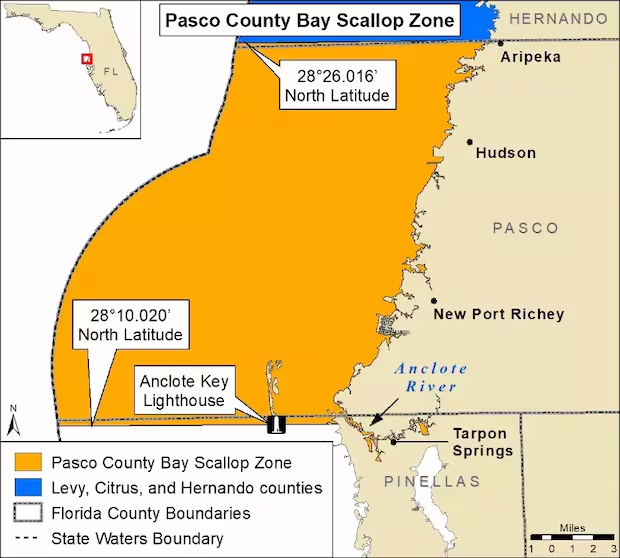
The closure, announced Wednesday, stretches from south of the Hernando County line to northern Pinellas and includes the Anclote River, according to Florida’s wildlife agency. The 2025 season opened July 10 and was slated to run until Aug. 18.

The so-called saxitoxin is found in shellfish and could lead to human illness if a contaminated scallop is eaten, according to the Florida Fish and Wildlife Conservation Commission.
The agency closed the Pasco season late last July after finding the same toxins, and re-opened it about a month later. The Pasco zone, which stretches to the Anclote Key Lighthouse, could reopen later in the summer if toxin levels decrease, according to officials.
Eating a scallop with high levels of the toxin can cause paralytic shellfish poisoning, according to the National Shellfish Sanitation Program. Symptoms like numbness, nausea, dizziness and headaches can begin in as quickly as 30 minutes.
The silver lining, though, is that the season is closing later this year compared to last year, and with school starting back up, the closure will likely have less of a financial impact on the county, he said.
The county’s annual Scallop & Music Festival is still on as scheduled this weekend, Mariano said.
For more than two decades, the scallop population struggled in Pasco waters and there was no scalloping allowed. Annual harvests began in 2018, and since then, boaters and swimmers have donned their snorkel gear and dip nets and searched the Gulf coast’s lush seagrass beds for the shellfish.
When the harvest is open, each boat can collect up to 10 gallons of shelled scallops, or a half gallon of meat, per day, according to state regulations.

County officials consider the annual scallop harvest to be a major economic boost. In 2023, more than 40,000 people visited Pasco County during scallop season for an estimated $11.7 million in economic value, according to figures provided last year by Adam Thomas, head of Pasco County Tourism.
While snorkelers can’t harvest scallops off Pasco County, the area is still open for fishing, boating and swimming, according to the wildlife agency. Other designated scallop harvesting areas along Florida’s Big Bend remain open.
Maya Burke, the Tampa Bay Estuary Program’s assistant director, said she’s somewhat surprised to see the Pyrodinium algae species in that area of the Gulf, “especially when we haven’t really seen blooms in Old Tampa Bay during the same timeframe.”
Burke said anyone wanting to go scalloping should keep a close eye on the harmful algal bloom reports issued by the state, and take health warnings seriously.
“Paralytic shellfish poisoning is nothing to be flippant about,” Burke wrote in a text message. “The community is better to be safe than sorry.”
The Tampa Bay Times launched the Environment Hub in 2025 to focus on some of Florida‘s most urgent and enduring challenges. You can contribute through our journalism fund by clicking here.


