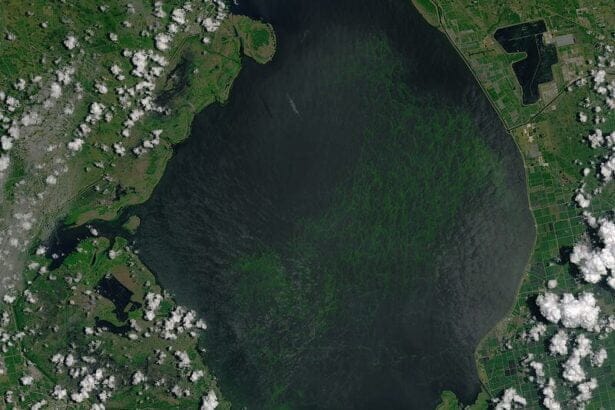


The report below states that the reason they are shutting down the scalloping activity near Pasco is because of toxic algae blooms. What they don’t say is why there are toxic algae blooms.
Algal blooms can be dramatic and are a result of excess nutrients from fertilizer, wastewater and stormwater runoff, coinciding with lots of sunlight, warm temperatures and shallow, slow-flowing water. St. Johns River Water Management District website.
Why are we not interested in solving this problem so that it will not be repeated? Why is it not mentioned here?
To be fair, there are other factors such as the high water temperatures, but the algae does not proliferate without the manmade nutrients allowed by our protection agencies.
This, again, is the price we pay in Florida because our DEP and water management districts are not doing their jobs and not protecting our waters. They allow excess fertilizers to be used which leach into our rivers and aquifer, and the reason they allow it is to avoid offending the polluters.
Read the original story with photos here at this link.
Comments by OSFR historian Jim Tatum.
jim.tatum@oursantaferiver.org
– A river is like a life: once taken,
it cannot be brought back © Jim Tatum
Florida pauses popular Pasco scallop season after unsafe toxins found in waters
Florda wildlife officials announced Wednesday they are temporarily closing all state waters along Pasco County south of the Hernando county line to recreational scallop harvesting after water quality tests found unsafe toxins produced by harmful algal blooms.
Officials said they detected potentially harmful levels of an algal bloom called Pyrodinium bahamense and the toxins it creates. The so-called saxitoxin can build up in shellfish and lead to human illness if a contaminated scallop is consumed, according to the Florida Fish and Wildlife Conservation Commission.
The closed waters, which include those north of the Anclote Key Lighthouse in northern Pinellas County, won’t reopen until water tests return to safe levels established by the National Shellfish Sanitation Program, according to the wildlife commission.
Pasco County Commissioner Jack Mariano said he was disappointed in the closure because it seemed that the scallops found with the contamination were mostly centered around the Anclote River. A couple of others were found further north and one was found in Hernando County waters.
“I asked them: ‘Why not just close the concentrated area?’” he said. “It’s not fair to us” if the problem is concentrated only in a small spot.

While Mariano said he is concerned about the health risk, he was surprised to see the notice of closure come out without Pasco being notified Wednesday evening.
I’m not pleased with them,” he said. He also said that the agency is considering closing scalloping in Hernando since a sampling there also had been suspect. Wildlife officials were out taking water samples in Hernando and Citrus counties this week, emails show.
Mariano said that he had just talked to Adam Thomas, head of Pasco County Tourism. Thomas was hosting social influencers Thursday who came to see scalloping. But when they went out, “it was so sad because there is not a single boat on the water.”
Experts regularly pull water samples looking for Pyrodinium from areas like Pasco County where scallops are being harvested. If they find it in the water, scallops will then be tested for the algal bloom toxins.
Scallops can collect the toxins, which are colorless, tasteless and have no smell, according to wildlife experts. Cooking cannot destroy the toxins. If a human were to consume a scallop with high levels of the toxin, they could become ill with paralytic shellfish poisoning, which could lead to dizziness, nausea, vomiting, respiratory issues, headaches and other health complications.
A person who eats a scallop with high levels of toxins can start having symptoms as soon as 15 minutes after ingestion, but symptoms can also start up to 10 hours later, according to the wildlife commission. Extreme cases of the illness can last for up to 45 days.
Pasco waters are still open for fishing, boating and swimming, wildlife officials said, and all other designated scallop harvest areas in the gulf remain open.
While it’s sad news that snorkelers won’t be able to search for scallops for now, there is an upside to closing down the harvest, according to Maya Burke, an assistant director of the Tampa Bay Estuary Program.
Tampa Bay relies on the scallops up north by Anclote Key for its own population. Scallops are considered broadcast spawners, meaning they release their sperm and eggs into the open water and let the tides and currents do the rest. Genetic analysis has shown the scallops in Tampa Bay are related to those found in and around Anclote Key to the north, Burke said.
“We know it’s a bummer because it’s a really fun thing,” Burke said in an interview. “But there’s a silver lining to this: A shorter scallop season could help repopulate Tampa Bay.”

This year, there was also community support to move the start of the season back from the Fourth of July holiday weekend, when boaters take to the water anyway to kick off the summer. Last year, a serious accident in Homosassa over the holiday sparked discussion about a later scalloping season start for safety reasons.
Pasco County officials, who had been pushing for a longer scallop season, were excited to hear earlier this year that the Florida Fish and Wildlife Conservation Commission was going to offer a 40-day season.
For 25 years, Pasco County was not permitted to have a scallop harvest because the state had determined that the shellfish didn’t populate Pasco waters at a high enough concentration to sustain a harvest at that time.
In 2016, the agency started to review how to manage the scallop crop considering community interest and the stability of the population. As the review continued, the agency detected strong support for seasons tied to regions.
The 40-day season approved for this summer would have been the longest since the popular activity returned.
/s3.amazonaws.com/arc-authors/tbt/bfca9102-6591-4891-9560-58f0928e710c.png "Max Chesnes - Environment and Climate Reporter")
/s3.amazonaws.com/arc-authors/tbt/d84eeed4-7cb9-4ddc-bf48-187e1fdb8393.png "Barbara Behrendt - Pasco County Reporter")