Climate change may have unexpected impacts on Florida, and most may be detrimental. Losing our stone crabs might be one of them.
Read the original article here in Florida Phoenix.
Comments by OSFR historian Jim Tatum.
jim.tatum@oursantaferiver.org
– A river is like a life: once taken,
it cannot be brought back © Jim Tatum
Florida seafood specialty, stone crabs, now show up in Chesapeake because of climate change
Nature knows climate is changing, so why can’t our elected leaders admit we need to do something about it?

Marine biologist Romuald Lipcius holding one of the stone crabs found in Chesapeake Bay, another sign of how climate change is altering our world despite all the denials from our politicians. (Photo/Courtesy of William & Mary’s Batten School & VIMS)
Gov. Ron DeSantis and the Legislature don’t think climate change is something we Floridians should be worrying about. But I guess nobody told the stone crabs.
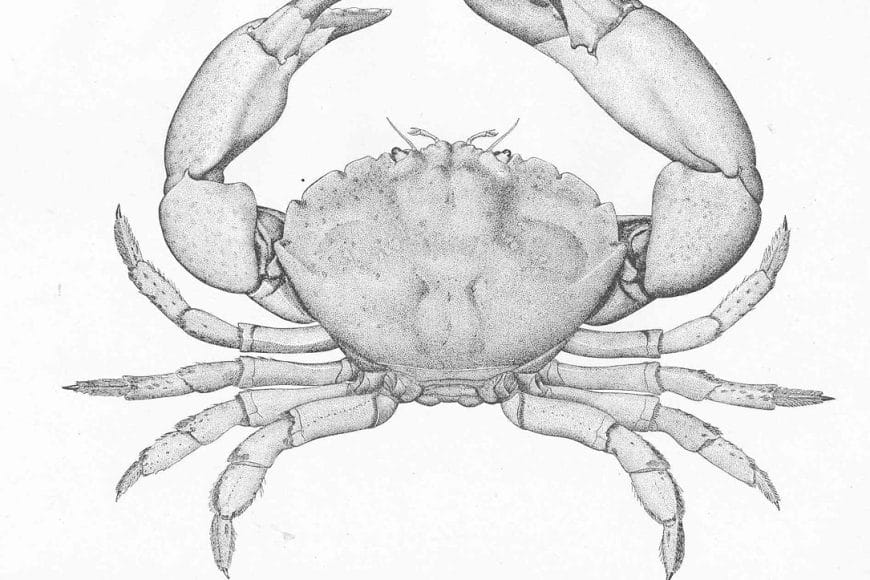
Stone crabs — or rather, their tasty claws — have long been considered a South Florida seafood specialty. You see them served at places like the iconic Joe’s Stone Crab in Miami Beach. In fact, the Florida Fish and Wildlife Conservation Commission says that Florida crabbers harvest 99% of all stone crab claws in the U.S. And the prices they charge ensure the crabbers are anything but crabby.
But now stone crabs are showing up as far north as Chesapeake Bay in Virginia.
Why? Because climate change has made conditions right for them to move.
“This is the first documented instance of stone crabs now being able to live inside of Chesapeake Bay,” marine biologist Romuald Lipcius told the South Florida Sun-Sentinel last week. “I believe, because of warming waters, that now, all of a sudden, stone crabs were able to survive, grow, and live for a long time inside of Chesapeake Bay.”
This is the latest sign of how our fossil fuel addiction is drastically altering our world. But our state and federal political “leaders” owe so much to their oil industry campaign contributors, they don’t want to hear about the consequences.
Last year, the governor signed into law a bill that deleted the two C-words from most places where they occurred in state law. More recently, his “Department of Governmental Efficiency” has targeted local government programs focused on weaning people off fossil fuels in its search for “wasteful spending.”
Two years ago, our Ivy League-educated governor admitted that climate change is real. Yet now he seems far more concerned about the danger posed by rainbow crosswalks than the damage done by rapidly intensifying hurricanes or rising sea levels.
Meanwhile, the federal Department of Energy has released a report that insists any concern about our warming world is overblown. Eighty-five scientists condemned the report as “riddled with errors, misrepresentations and cherry-picked data to fit the president’s political agenda.”
While these people desperately attempt to silence the science, nature is repeatedly showing us that the truth can’t be ignored. It just keeps poking its head up and saying, “Yo! I’m still here! What are you going to do about it?”
Virginia is for crabs
If you’re not familiar with stone crabs, they got their name because, as the Fort Myers News Press once reported, “In the water, stone crabs look like stones, like muddy-gray river rocks indistinguishable from the rocks under which they burrow.”
Stone crabs’ powerful claws are so huge, they account for more than half of their total weight. They’re also specialized. One claw is for crushing, the other for tearing. To us humans, though, the meat from either one tastes delicious.

Crabbers carefully remove only one claw and toss the crab back so it can regrow the appendage. This is why stone crabs are considered a sustainable fishery. But it’s also a major reason why the claws cost so much — that, and the fact that the season for catching them lasts only from Oct. 15 to May 1.
In 1978, a Florida legislator tried to pass a law banning anyone from harvesting both claws. To show why this law was needed, he brought in a stone crab missing both claws and tossed it into a tank with a triggerfish.
The triggerfish, “over the gruesome course of an hour, attacked it, killed it and picked it clean,” the News Press noted. But the bill did not pass. Anglers know not to risk their livelihood by getting greedy and taking both claws.
Because I consider fresh seafood one of Florida’s greatest glories, I called up Lipcius to find out more about the Chesapeake stone crabs. Turns out, stone crab larvae have been repeatedly spotted in the Chesapeake for several years now. But they wouldn’t stick around long, he said.
“They can’t survive temperatures below 40 degrees Fahrenheit,” he explained. “In Chesapeake Bay, the water temperature used to routinely drop below that in the winter.”
That’s not happening anymore, he said. The water has warmed too much. The crabbers are catching stone crabs that have survived three or four Virginia winters, he told me.
“I believe the stone crabs are here to stay,” he said. Scientists are now searching for signs that they’ve even begun breeding in the Chesapeake.
Because the crabbers finding them in their blue crab traps aren’t experienced at removing claws, he said, “for now we’re telling them, ‘Why don’t you toss them back?’” But soon, he predicted, local restaurants will start putting them on the menu.
Lipcius told me the stone crabs aren’t the only subtropical species to warm up to the warmer Chesapeake.
“We’ve never had a white shrimp fishery,” he said. “But now all of a sudden, they’re a common species here.”
He said one of the Chesapeake crabbers told him he’d caught three triggerfish. I guess it’s good that the stone crabs had both claws to fend off them off.
Virginia’s tourism slogan says that the state is for lovers. The way things are going, they may be able to add that it’s for lovers of Florida seafood.
Finding a unicorn
Lipcius called the Chesapeake stone crabs a rare instance of climate change creating a good-news story. I suppose it’s good news for folks in Virginia to have easier access to a type of seafood once considered exclusive to Florida.
But I wondered if it’s good news for Florida, where we’ve seen repeated marine heat waves that left us all in hot water.

Sarasota Bay Estuary
Program
To find out, I turned to Ryan Gandy, science and restoration manager for the Sarasota Bay Estuary Program. Before that, he spent 15 years as the FWC’s top stone crab expert.
Sure enough, Gandy told me the increased warmth of the waters off our coast has been causing problems for our own stone crabs and the crabbers catching them.
“They’re a biological indicator that the system is warming up,” Gandy said, referring to the trend.
The FWC has tried to protect stone crabs during the spawning season. But the spawning season has been changing because of the change in water temperature.
“We’re seeing [the spawning] begin earlier and earlier in the year,” Gandy said. “We used to close the season on May 15. Now it closes on May 1.”
Stone crabs are tough crustaceans, he said. A marine heat wave won’t kill them the way it does other species. But higher temperatures may hurt their prey.
“They feed on a lot of clams and mollusks like snails,” he said. Those species may be injured or killed by toxic algae blooms that have been known to accompany the heat waves, he told me.
 Like Lipcius, Gandy also mentioned other species changing their habits and habitats because of climate change. The feisty snook, for instance.
“It used to be finding a snook in the Florida Panhandle was like finding a unicorn,” he said. “Now it’s not unusual to find them near Pensacola.”
Snakes alive
There are plenty of other signs that nature’s being disrupted by the greenhouse gases spewing from our cars, trucks, boats, jets, and power plants.
As the world warms up, mangroves are sprouting in places they’ve never grown before. Our oceans have absorbed so much CO2, they’re becoming more acidic. Sea turtles, whose sex is determined by the temperature of the beach where they’re hatched, are turning out entire generations that are all female because it’s too hot to produce males.

I called up Dave Zierden, Florida’s official state climatologist — yes, we really do have one! — to ask him about this. He named several more examples. Invasive species, for instance.
Take those Burmese pythons we keep sending hunters out in the Everglades to track down. The snakes are slithering further and further north, showing up in West Palm Beach and Fort Myers. I keep waiting for one to claim a seat in the Florida Legislature, since that place tends to attract slimy characters.
Or look at what’s happening with green iguanas, which first wriggled their way into South Florida in 1965. Now the lizards that like to pop up in your toilet are showing up in Orange, Osceola, and Polk counties, too.
Both altered their range because of the changes we’ve made to the atmosphere, Zierden told me.
“More and more species of wildlife and plant life move further north as we get warmer temperatures,” he said.
Other pests are benefiting from our warmer weather, too — whiteflies, for instance, which attack Florida’s ornamental plant industry. Mosquitoes, which spread diseases such as dengue fever, are thriving thanks to the increased rain, longer summers, and milder winters.

Meanwhile, U.S. Energy Secretary Chris Wright called concerns about climate change “silly.” Wright, the former CEO of a natural gas fracking company, is busy this week plugging gas and oil in Europe as if that’s who still employs him, not us taxpayers.
“Climate change, for impacting the quality of your life, is not incredibly important,” Wright said last week, according to The New York Times. “In fact, if it wasn’t in the news, in the media, you wouldn’t know.”
I guess nobody told him about our rapidly intensifying hurricanes.
They don’t care
Just this week, DeSantis’ newly appointed lieutenant governor, Jay Collins, was bragging about what a great job he and his boss were doing.

page
“Aren’t you glad to live in a state that values its people, that fights for the things that matter, and prioritizes the things that make a difference at your kitchen table, at your dinner table and for your family?” he said, according to Politico.
But they’re NOT doing that.
In fact, Collins was the Senate sponsor of the bill deleting most mentions of climate change from state law, a bill that DeSantis signed.
Every time DeSantis, Collins, and the rest turn their heads away from the dangers posed by climate change, they’re showing that they do not value Floridians and their lives at all.
They aren’t doing anything about our rising sea levels or the changes in our weather patterns, other than pretending it doesn’t exist. The insurance companies know that this is what’s driving our multiple disasters, but you won’t hear a peep about it out of our “leaders.”
They’ll eagerly tackle kooky stuff like “chemtrails” and “ending vaccine mandates.” But they’re hostile to anything backed up by actual science. Sometimes I think we should refer to the governor as “Denial-Santis.” He’d rather scoff than do anything constructive.
I have been pondering how we could turn the steering wheel on this demolition derby car away from the crash we can see coming. The solution may lie with the stone crabs.
I think we need to flood the governor’s mailbox with letters, emails, and phone calls complaining about how Virginia is stealing our native seafood. Why, those Virginians are just a bunch of crab-nappers! We need to claw back those delicious claws!
This will engage our governor’s overly developed sense of grievance. I’m sure he’ll immediately declare a state of emergency and order the stone crabs returned.
To get the crabs to stick around, we need to convince him to make sure they’re comfortable here — no more marine heat waves, plenty of prey, and so forth.
Unless someone else volunteers, I can be the one to tell him this. But I want a guarantee that I can get stone crab claws for free for the rest of my life. If you have to deal with a crabby politician, you should get rewarded with the claws.




Craig Pittman